





What's Happening?
Space Exploration Technologies Corp., also known as SpaceX, is expanding its satellite-based broadband services across the United States, Ireland, Canada, and other international markets. The company operates through three main segments: Space, Connectivity,
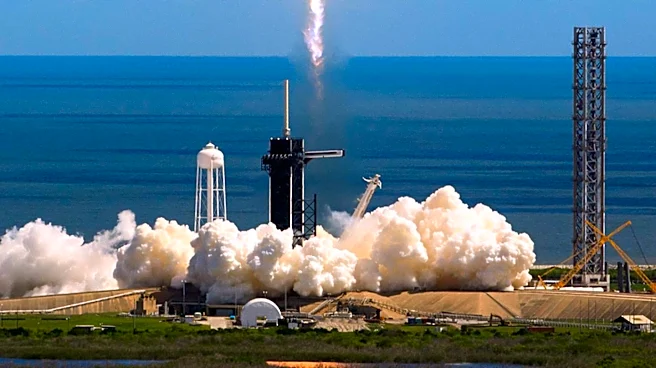
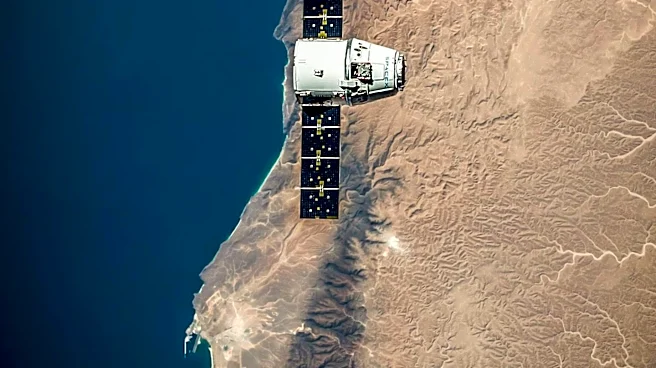
and AI. The Space segment focuses on designing, manufacturing, and launching reusable rockets, providing access to space for commercial and government customers. This includes the use of Falcon 9 and Falcon Heavy rockets for deploying payloads into orbit. The Connectivity segment operates a broadband data and communications network through Starlink satellites, offering connectivity to consumers, enterprises, and government customers. Additionally, the AI segment provides a vertically integrated AI platform, including a frontier LLM Grok and AI solutions for various customers. SpaceX, incorporated in 2002 and based in Starbase, Texas, continues to innovate in space technology and connectivity solutions.
Why It's Important?
The expansion of SpaceX's satellite-based broadband services is significant for several reasons. Firstly, it enhances global internet connectivity, particularly in remote and underserved areas, by leveraging the Starlink satellite network. This can bridge the digital divide, providing high-speed internet access to regions lacking traditional infrastructure. Secondly, the company's advancements in reusable rocket technology reduce the cost of space access, making it more feasible for commercial and governmental space missions. This could lead to increased space exploration and development opportunities. Furthermore, SpaceX's AI segment indicates a strategic move towards integrating advanced technologies into its operations, potentially leading to innovations in AI-driven space exploration and connectivity solutions. The company's growth and technological advancements could have a substantial impact on the global telecommunications and space industries.
What's Next?
SpaceX is likely to continue expanding its Starlink satellite network, aiming to provide global internet coverage. This expansion could involve launching additional satellites to enhance network capacity and coverage. The company may also focus on further developing its reusable rocket technology, potentially increasing the frequency and efficiency of space launches. As SpaceX continues to innovate, it may attract more commercial and governmental clients seeking cost-effective and reliable space access. Additionally, the integration of AI technologies into its operations could lead to new applications and services, further solidifying SpaceX's position as a leader in space technology and connectivity. Stakeholders, including investors, governments, and consumers, will be closely monitoring these developments and their implications for the telecommunications and space sectors.