



What's Happening?
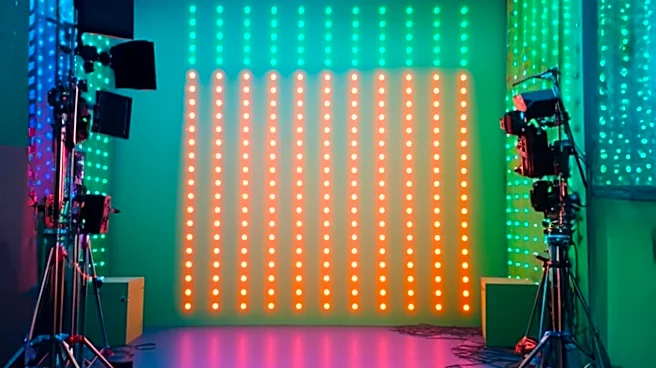
A science-fiction film titled “The Last Earthling,” directed and co-written by Christian Cashmir, has commenced production in St. Petersburg, Florida. The filmmakers are leveraging advanced LED screen technology to create otherworldly settings within
Litewave Media's studio, aiming to complete the project efficiently and cost-effectively. The production is largely local, with approximately 95% of the crew, actors, and costume production sourced from the area. Actor Paul Wilson, who plays Glen Riseman, head of U.S. Space Command in the film, highlighted the practical benefits of the virtual set, including reduced travel and accommodation needs for local talent. Producer Cameron Brumbelow noted that companies filming in Hillsborough County can recover nearly 80% of their production costs through tax rebates within 60 days, a more immediate reimbursement process compared to neighboring Pinellas County, which has more extensive distribution requirements.
Why It's Important?
This development signifies a growing trend in filmmaking towards virtual production technologies and localized economic incentives. The use of LED screens dramatically cuts production costs, with Paul Wilson estimating that a film of this scale would have cost $35-40 million fifteen years ago. This cost reduction makes ambitious projects more feasible for independent studios and regional production hubs. The availability of direct tax rebates, as opposed to tax credits that need to be sold, provides immediate financial liquidity to production companies, fostering a more attractive environment for film investment. This model could encourage more film productions to consider regions with favorable local incentives, potentially boosting local economies through job creation in various sectors, from technical crew to hospitality and support services. It also highlights a competitive landscape among counties within Florida to attract film projects, showcasing the impact of local policy on industry growth.
What's Next?
Filmmakers anticipate a rough cut of “The Last Earthling” to be ready by 2027, with potential film festival screenings in late 2027 or 2028. The movie is expected to be released on a streaming platform, such as Amazon Prime or Tubi, in the coming year. The success of this production, particularly its efficient use of virtual technology and local tax rebates, could serve as a case study for future film projects in Florida and other states. It may prompt other counties and states to re-evaluate their film incentive programs to offer more immediate and substantial financial benefits to attract productions. The continued adoption of virtual production techniques could also lead to further innovation in film technology and a shift in how and where movies are made, potentially decentralizing film production away from traditional hubs.
Beyond the Headlines
The shift towards virtual production, exemplified by the LED screen technology used in “The Last Earthling,” represents a significant evolution in the film industry. This technology not only reduces costs but also offers creative flexibility, allowing filmmakers to create complex and fantastical environments without extensive physical set construction or location scouting. This could democratize filmmaking, making high-quality productions more accessible to a wider range of creators. Furthermore, the emphasis on local talent and resources, with 95% of the production being local, strengthens regional film ecosystems and provides opportunities for local artists and technicians. This model challenges the traditional Hollywood-centric production paradigm, fostering self-sustaining film communities outside major industry centers. The immediate nature of the tax rebates also raises questions about the effectiveness of different incentive structures and their impact on local economic development and cultural production.