



What's Happening?
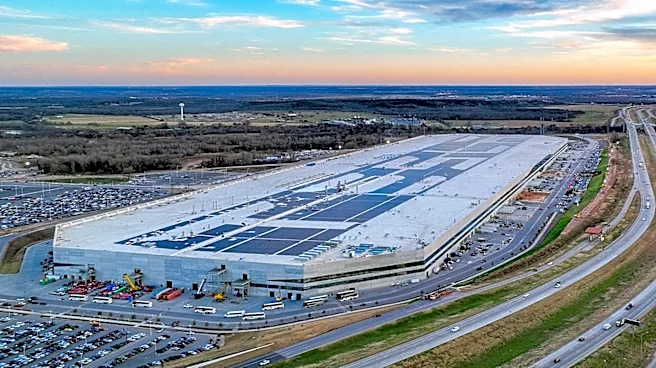
Coreshell Technologies, a U.S. battery-tech company, is set to construct a $50 million gigafactory in the U.S. dedicated to producing lithium-ion cells with anodes made entirely from metallurgical silicon. This initiative, supported by a U.S. Department
of Energy award under the Infrastructure Investment and Jobs Act, aims to significantly reduce the U.S.'s dependence on foreign graphite, 93% of which is currently supplied by China. The project will utilize domestically sourced metallurgical-grade silicon (MGS) and incorporate AM Batteries’ Powder-to-Electrode process for cathodes, a dry manufacturing method that eliminates solvents and energy-intensive drying. This approach is expected to lower production costs and improve performance, making domestically produced batteries competitive with those from Asia. The factory will have a capacity of approximately 2 gigawatt-hours for electrode manufacturing and 1.5 GWh for cell assembly, creating over 100 jobs in production, technical, and administrative roles.
Why It's Important?
This development is crucial for bolstering U.S. energy independence and national security. The current reliance on China for over 93% of graphite, a critical component in lithium-ion batteries, poses a significant supply chain vulnerability for the U.S. automotive and defense industries. By establishing a domestic supply chain for silicon-anode batteries, Coreshell Technologies aims to provide a secure alternative that is not subject to geopolitical risks or foreign control. The use of metallurgical silicon, which is domestically available, further strengthens this independence. Moreover, the integration of AM Batteries' dry-coating process offers environmental benefits by reducing solvent use and energy consumption, potentially setting a new standard for sustainable battery manufacturing. This project could also stimulate economic growth by creating jobs and fostering innovation in the U.S. battery sector, positioning the country as a leader in advanced battery technology.
What's Next?
Coreshell Technologies will proceed with scaling production alongside the construction and equipment ramp-up of the new gigafactory. The company plans to hire over 100 individuals for production, technical, and administrative positions as the project progresses. The success of this initiative could pave the way for broader adoption of silicon-anode technology in the U.S. automotive and defense sectors, offering a viable domestic alternative to batteries reliant on Chinese graphite. Future steps will likely involve demonstrating the cost-competitiveness and performance of these domestically produced high-performance battery cells against mass-market cells from Asia. The project's long-term impact will depend on its ability to consistently meet National Defense Authorization Act requirements and support the growing demand for electric vehicles and specialized military applications.
Beyond the Headlines
The shift towards silicon-anode batteries represents a deeper strategic move beyond mere material substitution; it signifies a fundamental re-evaluation of critical mineral dependencies and manufacturing processes. The project's emphasis on domestically sourced materials and advanced dry-coating techniques highlights a broader trend towards resilient and sustainable supply chains. This could trigger a ripple effect across the U.S. manufacturing landscape, encouraging other industries to explore similar localization and innovation strategies. Furthermore, the development of batteries that meet National Defense Authorization Act requirements underscores the increasing convergence of energy technology and national security. This initiative could also set a precedent for future government funding in critical technology sectors, prioritizing projects that enhance domestic capabilities and reduce foreign reliance, thereby shaping long-term industrial policy and technological sovereignty.