


What's Happening?
Ted Turner is one of eight candidates on the Contemporary Era Ballot for the National Baseball Hall of Fame's Class of 2027. He is being considered alongside other notable figures such as Sandy Alderson, Bruce Bochy, Dusty Baker, Lou Piniella, Joe Maddon,
and Bill White. A 16-member panel, comprising Hall of Fame players, Major League executives, media members, and historians, will evaluate these candidates. To be elected, a candidate must secure a minimum of 12 votes, which represents at least 75% of the panel's votes. The results of this ballot are scheduled to be announced on December 6.
Why It's Important?
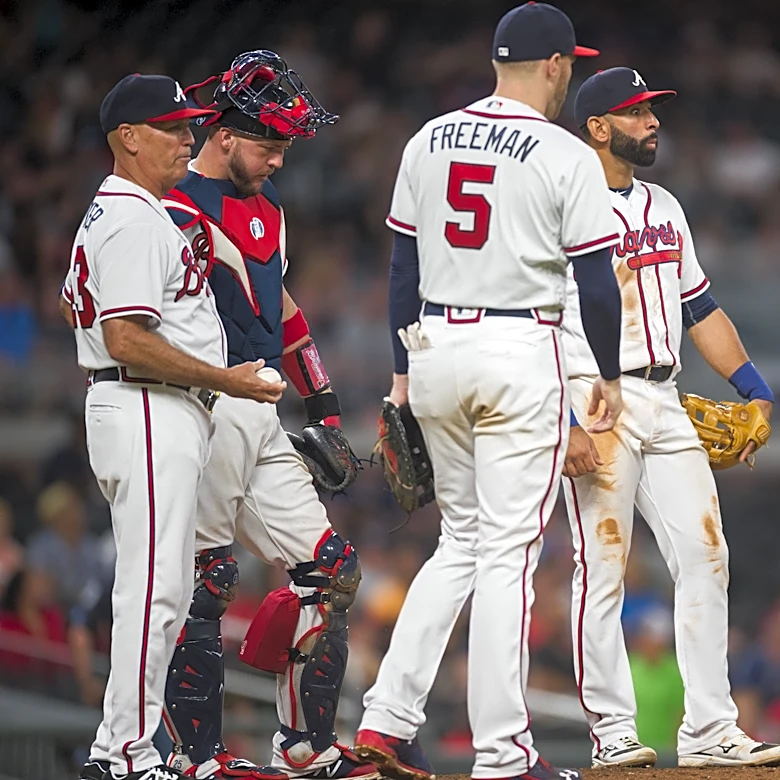
Ted Turner's inclusion on the Contemporary Era Ballot highlights his significant, albeit unconventional, impact on Major League Baseball. While not a traditional player or manager, Turner's pioneering work in sports television and his ownership of the Atlanta Braves brought innovative approaches to the sport's broadcasting and marketing. His candidacy underscores a broader recognition of individuals who have shaped baseball beyond the field, influencing its commercial success and public reach. His potential induction could set a precedent for acknowledging diverse contributions to the sport's legacy, impacting how future Hall of Fame classes are perceived and selected.
What's Next?
The 16-member panel will convene to cast their votes for the Class of 2027. The announcement of the election results is set for December 6. Following the announcement, those elected will be formally inducted into the National Baseball Hall of Fame. The outcome will determine whether Turner, along with the other candidates, will join the ranks of baseball's most honored figures. The decision will also likely spark discussions among baseball enthusiasts and historians regarding the criteria for Hall of Fame induction and the evolving definition of 'impact' within the sport.
Beyond the Headlines
Ted Turner's candidacy extends beyond his direct involvement in baseball operations, touching upon the intersection of sports, media, and business. His ownership of the Atlanta Braves and his role in establishing CNN revolutionized how sports were broadcast and consumed, significantly expanding baseball's audience and revenue streams. His potential induction would acknowledge the profound influence of media moguls and innovators on the professional sports landscape. This could open doors for future considerations of individuals whose contributions are primarily in broadcasting, marketing, or ownership, rather than on-field performance, prompting a re-evaluation of what constitutes a 'Hall of Famer' in modern sports.