





What's Happening?
Skyrora, the UK's sole orbital rocket startup, has postponed its target for a first orbital launch to 2030, a four-year delay from its previous 2026 goal. This decision follows a successful hotfire test of a scaled-down version of its first-stage engine.
The company is developing a 70 kN engine that utilizes a staged combustion cycle with high-test peroxide (HTP) and kerosene, a propellant combination that has never been commercially qualified for staged combustion. Skyrora prints these engines in-house at its Cumbernauld, North Lanarkshire factory using its proprietary Skyprint 2 hybrid 3D-printing process. The company's strategy prioritizes building a stable business through diversified revenue streams, including component sales, facility rentals, and 3D-printing contracts, such as a partnership with Spirit AeroSystems, rather than pursuing a rapid, high-expenditure sprint to orbit. Skyrora holds the only UK vertical launch operator license but cannot yet use it for orbital missions, generating revenue through other means while awaiting full operational capability.
Why It's Important?
This development highlights the significant challenges and strategic decisions faced by emerging space companies, particularly those aiming for orbital launch capabilities. Skyrora's focus on a stable business model, rather than a rapid 'sprint to orbit,' reflects a cautious approach in a highly capital-intensive industry where many startups have faced financial difficulties or collapse, such as Orbex and Virgin Orbit. The technical ambition of developing a world-first HTP/kerosene staged combustion engine underscores the innovative spirit within the UK's space sector, but also the inherent risks and extended timelines associated with pioneering new propulsion technologies. For the U.S. and global space industry, Skyrora's progress, or lack thereof, in achieving orbital launch capability impacts the competitive landscape for small satellite launches and the broader development of advanced rocket propulsion systems. The delay also raises questions about the UK's ability to establish sovereign launch capabilities, especially as other nations and companies, like Germany's Isar Aerospace, achieve orbital milestones sooner.
What's Next?
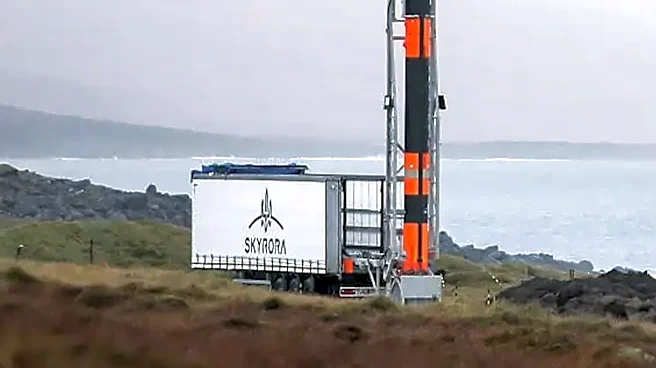
Skyrora's immediate next steps involve a full-scale qualification campaign for its 70 kN engine, followed by serial production of nine flight engines and stage integration testing, each representing multi-year milestones. The company is also exploring international launch sites for its Skylark L2 suborbital rocket, which has been operationally ready since 2022 but has been grounded due to regulatory and infrastructure delays in the UK. A second Skylark L2 suborbital mission is tentatively planned for 2027. The UK government's new Space Strategy, committing £7.8 billion in investment through 2029–30, emphasizes domestic launch capability, which could provide future support for Skyrora. However, the company's reliance on diversified revenue to fund its orbital ambitions means its timeline remains dependent on commercial throughput rather than a large, dedicated funding round. The success of its unique engine technology will be a critical determinant of its long-term viability and its ability to contribute to the UK's sovereign space aspirations.
Beyond the Headlines
Skyrora's journey reflects a broader tension in the global space industry between rapid innovation and sustainable business development. The pursuit of a 'world-first' engine technology, while potentially revolutionary, demands significant time and resources, often clashing with investor expectations for quick returns. The company's cautious approach, learning from the failures of others, suggests a maturation in the private space sector, where long-term stability is increasingly valued over aggressive timelines. Furthermore, the challenges Skyrora faces with UK regulatory frameworks and spaceport infrastructure highlight the critical role of government policy and investment in fostering a domestic space industry. The competition from international players like Isar Aerospace, which achieved orbit much faster, underscores the need for a cohesive national strategy to support indigenous capabilities. The ethical implications of space exploration, including environmental impact and responsible use of orbital space, will also continue to shape the regulatory and public perception landscape for companies like Skyrora.