
What's Happening?
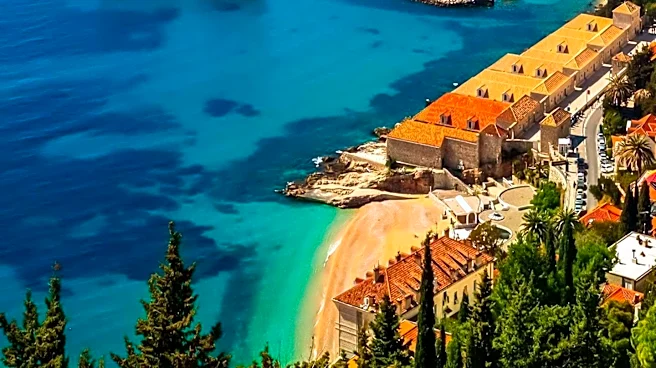
Dubrovnik, Croatia, is celebrated for its historic Old Town, a UNESCO World Heritage site, characterized by medieval architecture, narrow cobblestone streets, and ancient city walls. Key attractions include the Rector's Palace, the main city square, and the Church
of St. Blaise. The city provides a range of accommodations, from budget-friendly options to luxury stays, many offering views of the Adriatic Sea. Additionally, Dubrovnik serves as a convenient starting point for day trips to the Bay of Kotor in Montenegro, which features ancient monasteries and picturesque fishing villages. The journey to Montenegro from Dubrovnik typically takes a few hours by car, with border crossings requiring specific documentation like a Cross Border Card for rental vehicles. Travelers are advised to depart early to avoid long queues at the border, especially during peak seasons.
Why It's Important?
Dubrovnik's status as a major European tourist destination significantly contributes to Croatia's tourism economy, attracting visitors globally with its historical and cultural offerings. The city's well-preserved heritage not only draws tourists but also supports local businesses, including hotels, restaurants, and tour operators. The accessibility of day trips to Montenegro from Dubrovnik highlights regional tourism integration, offering visitors a broader experience of the Adriatic coast. This cross-border travel fosters economic activity in both regions and provides diverse cultural insights. The ease of travel between these countries, despite border formalities, underscores the growing interconnectedness of European tourism markets, allowing for more comprehensive travel itineraries and boosting the overall appeal of the Balkan region as a tourist hub.
What's Next?
Visitors to Dubrovnik will continue to explore its historical sites and enjoy its coastal beauty. For those planning day trips to Montenegro, early morning departures are recommended to minimize border wait times, particularly during the busy summer months of July and August. Travelers should ensure they have all necessary documents, including passports and a Cross Border Card if driving a rental car, to facilitate smooth border crossings. Future developments may include enhanced tourism packages that combine Croatian and Montenegrin attractions, further streamlining travel logistics between the two countries. The continued popularity of both destinations is likely to drive ongoing investment in tourism infrastructure and services.
Beyond the Headlines
The appeal of Dubrovnik extends beyond its immediate attractions, representing a broader trend in heritage tourism where historical sites are meticulously preserved and leveraged for economic benefit. The city's resilience in maintaining its UNESCO status while managing high tourist volumes presents a model for other historical cities. The integration of day trips to neighboring Montenegro also reflects a shift towards multi-country travel experiences, where tourists seek to maximize their cultural exposure within a single trip. This trend encourages regional cooperation in tourism and infrastructure development, potentially leading to more seamless travel corridors and shared economic growth. The contrast between Dubrovnik's bustling tourist scene and Montenegro's relatively 'undiscovered' charm offers a diverse travel narrative, catering to different preferences for exploration and tranquility.