







What's Happening?
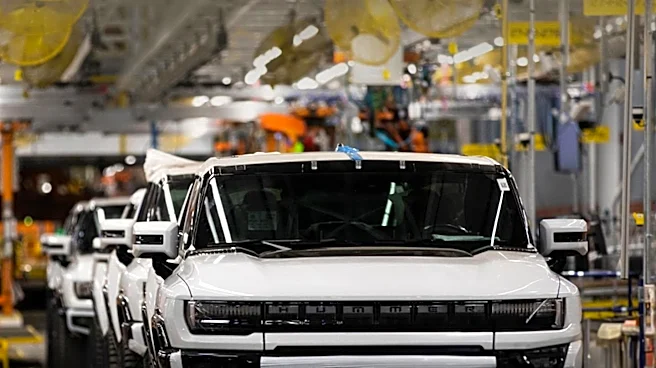
General Motors (GM) has transformed its Detroit-Hamtramck Assembly Center into Factory ZERO, a flagship facility central to the company's electric vehicle (EV) strategy. This significant investment has converted a traditional American auto plant into an EV-focused
manufacturing operation. Factory ZERO is now responsible for producing electric vehicles such as the Chevrolet Silverado EV and the GMC Hummer EV. According to data from the International Council on Clean Transportation (ICCT), the plant has an estimated annual production capacity of approximately 87,500 electric vehicles. This conversion represents a substantial commitment by GM to expand its EV manufacturing capabilities within the United States, contributing to the broader growth of the American EV industry.
Why It's Important?
The establishment of Factory ZERO is a critical development for the U.S. automotive industry, signaling a major shift towards electric vehicle production by one of the nation's largest automakers. This transformation not only secures jobs in traditional manufacturing regions but also positions the United States as a leader in EV innovation and production. By converting an existing facility, GM demonstrates a model for repurposing industrial infrastructure for future-oriented technologies, which can have significant economic benefits for local communities. The production of high-demand electric trucks and SUVs at Factory ZERO directly addresses consumer preferences and market trends, contributing to the wider adoption of EVs. This move also intensifies competition within the EV market, potentially driving down costs and accelerating technological advancements across the industry, benefiting consumers and the environment.
What's Next?
The ongoing evolution of America's EV manufacturing industry suggests that facilities like Factory ZERO will continue to play a pivotal role. GM's investment in this plant is part of a larger trend where automakers are dedicating billions to build or expand massive manufacturing campuses for electric vehicles. While Factory ZERO is already a significant producer, the industry is dynamic, with new facilities, expansions, and battery factories constantly reshaping the landscape. GM, along with other major players like Tesla, Ford, and Hyundai, is expected to continue investing in production infrastructure and adapting to changing EV demand. This will likely involve further technological upgrades, potential capacity expansions, and strategic adjustments to their EV lineups to maintain competitiveness and meet future market needs. The success and growth of Factory ZERO will be a key indicator of GM's overall EV strategy and its impact on the U.S. automotive sector.
Beyond the Headlines
The conversion of the Detroit-Hamtramck Assembly Center into Factory ZERO carries deeper implications beyond just vehicle production. It symbolizes a broader industrial transition in the United States, moving away from traditional internal combustion engine manufacturing towards a sustainable, electric future. This shift has significant environmental benefits, reducing carbon emissions and reliance on fossil fuels. Socially, it represents a re-skilling of the workforce and the creation of new types of manufacturing jobs, potentially revitalizing industrial regions. Economically, it fosters a domestic supply chain for EV components, reducing dependence on foreign markets and strengthening national economic resilience. The success of Factory ZERO could serve as a blueprint for other legacy automakers looking to transition their operations, influencing public policy on industrial development, environmental regulations, and workforce training. It underscores the complex interplay between technological advancement, economic policy, and societal change in the pursuit of a greener economy.