






What's Happening?
Lucid Group's stock experienced a significant 9.2% decline, closing at $2.96 per share, primarily due to ongoing investor disappointment stemming from its third-quarter financial earnings report. The report highlighted weaker demand for luxury electric
vehicles and substantial capital spending. Lucid reported total revenue of $350.32 million, a modest 4.1% increase year-over-year, but it fell short of Wall Street's consensus expectations, which ranged from $395 million to $407 million. The company also posted an adjusted loss of $2.30 per share, exceeding the consensus estimate of $2.27 per share, with a net quarterly loss reaching $1.08 billion under GAAP. Compounding these financial concerns is Lucid's high cash burn rate, with approximately $1.04 billion in negative free cash flow depleted during the quarter. Although Saudi Arabia's Public Investment Fund (PIF) extended its credit facility by $1.75 billion, providing an operational runway into late 2027, investors remain concerned about recurring cash deficits and potential future capital raises that could dilute existing shareholders. The selling pressure intensified as multiple Wall Street brokerage houses, including Citigroup, Cantor Fitzgerald, Robert W. Baird, RBC Capital, and Bank of America, slashed their price targets for Lucid.
Why It's Important?
The significant drop in Lucid Group's stock price and the underlying financial results underscore critical challenges facing the luxury electric vehicle market and emerging automotive original equipment manufacturers (OEMs). The revenue shortfall and substantial net losses indicate that Lucid is struggling to meet sales targets while maintaining massive operational overhead, raising concerns about its solvency and financing capabilities. The company's reliance on external funding, particularly from Saudi Arabia's PIF, highlights the capital-intensive nature of the EV industry and the risks associated with prolonged unprofitability. Analyst downgrades further erode investor confidence, signaling a lack of near-term institutional buying support and potentially triggering automated trading algorithms that exacerbate sell-offs. This situation reflects broader market anxieties about the sustainability of growth for EV startups, especially as demand for luxury models may be softening and competition intensifies. For the U.S. automotive sector, Lucid's struggles could signal a more cautious investment environment for EV manufacturers that have yet to achieve consistent profitability and scale.
What's Next?
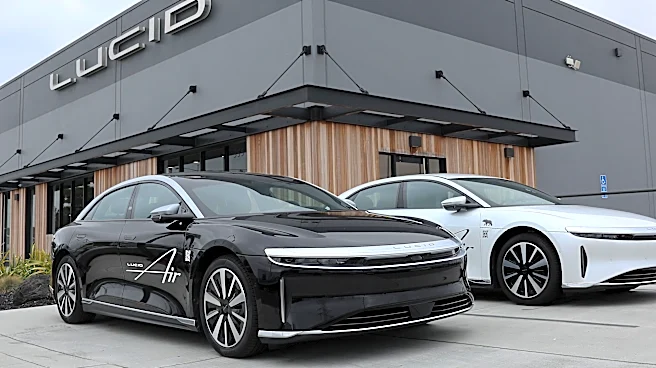
Lucid Group faces several critical milestones and challenges in the coming months. Investors will closely monitor the company's fourth-quarter vehicle production and delivery figures, typically disclosed in early January 2027, to assess if demand for the Lucid Air sedan is stabilizing. The full-year and Q4 2026 earnings report, expected in late February to early March 2027, will provide crucial insights into projected capital spending, gross margin targets, and free cash burn. A key operational priority is the successful commercial production ramp of the Lucid Gravity SUV in the first half of 2027, as capturing high-margin SUV market share is vital for scaling revenue. Updates on the midsize vehicle platform, projected for production in the second half of 2027, will also be important. Macroeconomic factors, such as potential interest rate adjustments by the Federal Reserve, could influence consumer demand for luxury electric vehicles. Continued high cash burn rates and the potential for further shareholder dilution remain significant risks, while any unexpected positive announcements could trigger short-squeeze rallies.
Beyond the Headlines
Lucid Group's current financial predicament extends beyond immediate stock performance, touching upon broader themes within the electric vehicle industry and capital markets. The company's persistent cash drain, exceeding $1 billion per quarter, highlights the immense financial resources required to establish and scale an automotive manufacturing business, particularly one focused on the luxury segment. This situation raises questions about the long-term viability of EV startups that cannot quickly achieve economies of scale and profitability. The reliance on a single major financial backer, Saudi Arabia's PIF, while providing a lifeline, also concentrates financial risk and could influence strategic decisions. Furthermore, the intense competition from both legacy luxury automakers and established EV leaders like Tesla, coupled with an industry-wide price war, underscores the challenging market dynamics. This environment forces companies to offer discounts, compressing gross margins and making the path to profitability even more arduous. Lucid's journey will serve as a case study for the sustainability of high-growth, capital-intensive ventures in a rapidly evolving technological landscape.