


What's Happening?
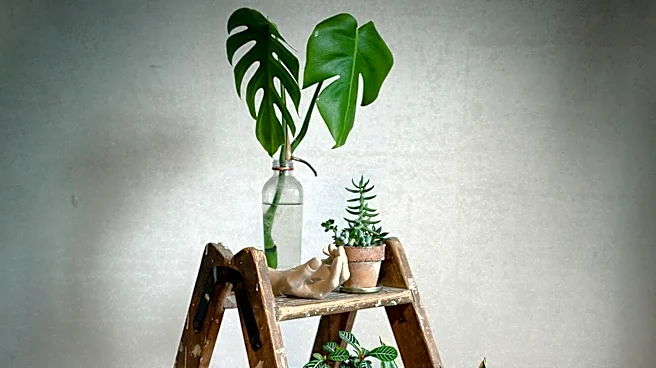
Old wooden ladders are being repurposed into functional and aesthetically pleasing entryway organizers, offering an affordable and eco-friendly alternative to traditional furniture. This DIY trend, highlighted by a Hometalk video, involves leaning a wooden ladder against
a wall and anchoring it for stability. The lean-to design is particularly beneficial for small entryways as it occupies less floor space than benches or credenzas. To enhance its utility, hooks can be added to the ladder for hanging coats, keys, and other accessories. For round rungs, S-hooks provide movable storage, while cup hooks can be screwed directly into softer wood for smaller items. Larger coat hooks can be mounted on the sides for heavier garments. The emphasis is on maintaining a rustic aesthetic by using unfinished or naturally stained wood, with reclaimed wood being a preferred choice to avoid a polished look. This upcycling method transforms a common household item into a farmhouse-chic storage solution.
Why It's Important?
This trend is important as it promotes sustainable living and creative reuse of materials, aligning with growing consumer interest in eco-friendly home solutions. By repurposing old wooden ladders, individuals can reduce waste and minimize the demand for new furniture production, contributing to a more circular economy. Economically, it offers a cost-effective way for homeowners to furnish and organize their entryways, potentially saving money compared to purchasing new, store-bought storage units. Socially, it encourages DIY culture and personal expression in home decor, allowing individuals to create unique pieces that reflect a rustic or farmhouse-chic style. This approach also highlights the value of vintage and reclaimed items, fostering a market for second-hand goods found in thrift stores, Facebook Marketplace, and local buy-and-sell groups. The adaptability of this solution means it can be used in various living spaces, including shared homes or open-plan areas, to define functional zones.
What's Next?
The popularity of this DIY project is likely to continue growing, with more individuals seeking creative and sustainable ways to decorate and organize their homes. We can expect to see an increase in online tutorials and social media content showcasing variations and enhancements to the basic ladder organizer. Retailers specializing in home decor might start offering kits or components specifically designed for this type of upcycling, such as rustic hooks or anchoring hardware. The trend could also inspire similar repurposing projects for other household items, further expanding the market for reclaimed materials and DIY supplies. Additionally, interior designers and home staging professionals may incorporate these rustic ladder organizers into their designs to appeal to clients looking for unique, character-filled spaces. The focus on natural, unfinished wood suggests a continued preference for authentic and organic aesthetics in home design.
Beyond the Headlines
Beyond its immediate utility, the repurposing of old wooden ladders taps into a broader cultural appreciation for craftsmanship, history, and the charm of imperfection. The rustic aesthetic, characterized by natural materials and distressed finishes, often evokes a sense of nostalgia and comfort, contrasting with the sleek, modern designs prevalent in contemporary interiors. This movement reflects a desire to connect with simpler times and a more hands-on approach to home living. Ethically, it underscores the value of resourcefulness and challenges the throwaway culture by demonstrating how discarded items can be given new life. Legally, there are minimal implications, primarily concerning the safe anchoring of the ladder to prevent accidents. Culturally, it reinforces the idea that beauty can be found in the old and the imperfect, fostering a unique blend of functionality and artistic expression within the home environment.