









What's Happening?
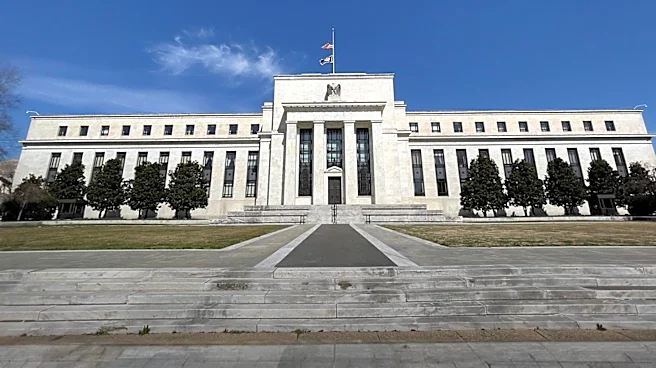
The Federal Reserve's Board of Governors has reported a 0.1% increase in U.S. industrial production for June compared to the previous month. This slight rise contributes to a year-over-year growth of 1.1% in industrial output. While manufacturing output remained
unchanged from May, it showed a 1.1% increase compared to the same month last year. The utilities sector experienced a 0.4% month-on-month increase and a 3% rise year-over-year. Additionally, mining output grew by 0.4% from May and 2.4% from June 2025. Despite these gains, capacity utilization remained stable at 76.1%, which is 3.3 percentage points below its long-run average.
Why It's Important?
The modest increase in industrial production is a positive indicator for the U.S. economy, suggesting resilience in the face of various economic pressures. The growth in utilities and mining sectors highlights areas of strength, potentially driven by increased demand and favorable market conditions. However, the stagnant manufacturing output and below-average capacity utilization indicate potential challenges in achieving more robust industrial growth. These figures are crucial for policymakers and investors as they assess the health of the industrial sector and its contribution to overall economic performance. The data may influence future monetary policy decisions by the Federal Reserve, particularly in balancing growth with inflationary pressures.
What's Next?
Future developments in industrial production will likely depend on several factors, including consumer demand, global supply chain dynamics, and energy prices. Policymakers and industry leaders will be closely monitoring these indicators to make informed decisions. The Federal Reserve may consider these trends in its upcoming meetings, potentially adjusting interest rates or other monetary policies to support continued economic growth. Additionally, businesses may need to adapt strategies to address capacity utilization challenges and leverage growth opportunities in the utilities and mining sectors.