

What's Happening?
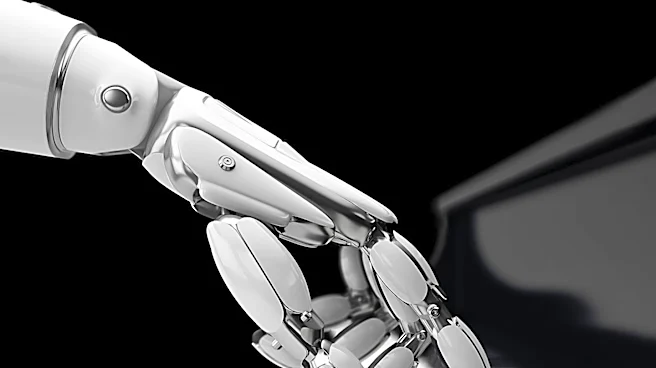
Renowned musician Nick Cave has intensified his criticism of AI-generated music, describing it as 'our final, most soul-destroying humiliation' and a threat to human creativity. In his 'The Red Hand Files' newsletter, Cave responded to a fan's question
about his stance on AI, stating that while AI 'may save the world, annihilate it, or do something in between,' its role in new music is 'demonic potential to hollow out human endeavour and sever our connection to the divine.' He specifically targeted AI song generator platforms like Suno, calling them 'the Great Cancellator' for producing imitations of the soul in mere seconds. Cave views this as an 'affront to any songwriter who has lived and struggled in this world and earned the right to create a song,' arguing that these platforms make humanity unnecessary and reduce the fruits of human striving to mere products. He has previously called AI songwriting 'a grotesque mockery of what it is to be human' and revealed receiving numerous AI-generated song lyrics 'in the style of Nick Cave,' which he found disturbing.
Why It's Important?
Nick Cave's vocal opposition highlights a growing concern among artists and creators regarding the impact of artificial intelligence on the music industry and artistic integrity. His perspective underscores the fear that AI could devalue human creativity, diminish the unique emotional connection between artists and their work, and ultimately lead to a homogenized, soulless artistic landscape. This sentiment resonates with many who believe that true art stems from human experience, struggle, and emotion, elements that AI cannot replicate. The proliferation of AI-generated music could also have significant economic consequences for human artists, making it harder for them to compete, gain recognition, and earn a living. If AI can produce music quickly and cheaply, the demand for human-composed and performed music might decrease, potentially leading to a crisis for professional musicians and songwriters. This debate is crucial for shaping future policies and ethical guidelines around AI's role in creative fields.
What's Next?
The ongoing debate sparked by artists like Nick Cave is likely to fuel further discussions within the music industry, among policymakers, and within the broader public about the ethical boundaries of AI in creative endeavors. This could lead to increased advocacy for stronger intellectual property protections for artists, potentially influencing legislative efforts like the ELVIS Act in Tennessee or the proposed NO FAKE Act at the federal level, which aim to safeguard individual voices and images from unauthorized AI use. Record labels and streaming platforms may face pressure to implement clearer distinctions between human-created and AI-generated content, and to develop fair compensation models for artists whose work is used to train AI systems. Furthermore, the artistic community may explore new ways to celebrate and emphasize the unique value of human-made music, potentially fostering a counter-movement that champions authentic human expression in the face of technological advancement.
Beyond the Headlines
Beyond the immediate concerns of copyright and economic impact, Nick Cave's critique delves into the existential implications of AI for human identity and purpose. His assertion that AI 'mocks creation itself' and represents 'our final, most soul-destroying humiliation' suggests a deeper anxiety about what it means to be human in an age where machines can mimic our most profound expressions. This raises philosophical questions about the essence of art, the role of suffering and experience in creativity, and whether a machine can ever truly possess a 'soul' or 'heartbreak' necessary for genuine artistic output. The discussion extends to the potential for AI to alter our perception of value, where the ease of generation might overshadow the depth of human effort. This cultural shift could redefine how society values originality, authenticity, and the human element in all forms of creative work, prompting a re-evaluation of what we consider truly artistic and meaningful.