





What's Happening?
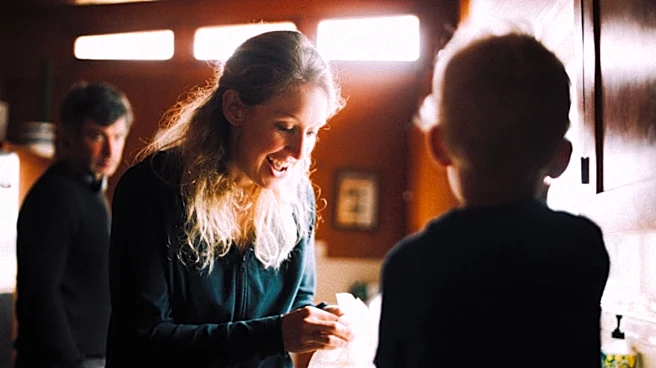
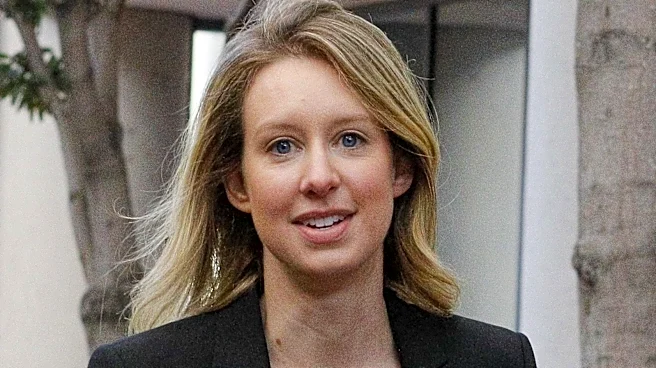
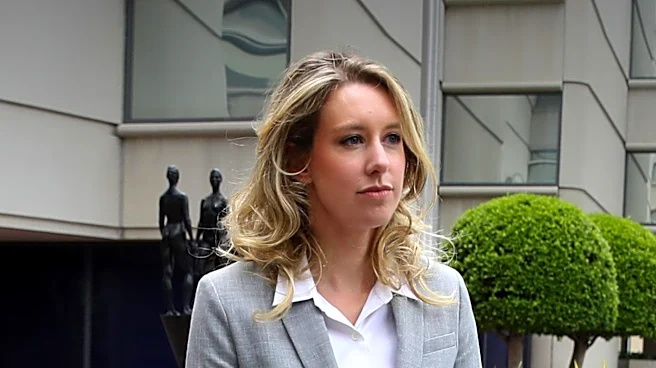
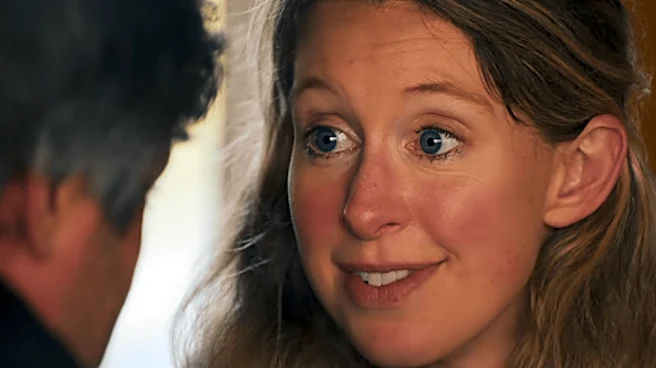
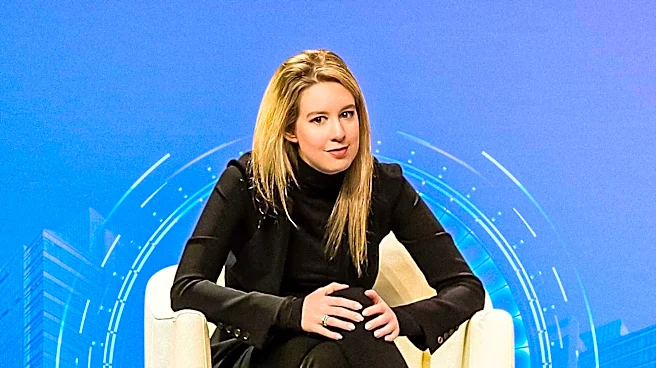
Nathan Fielder and Lance Oppenheim have co-directed the new A24 documentary 'You Can See Everything,' which delves into the concept of truth by focusing on Elizabeth Holmes, the former Theranos CEO and convicted fraudster. The film's first half documents
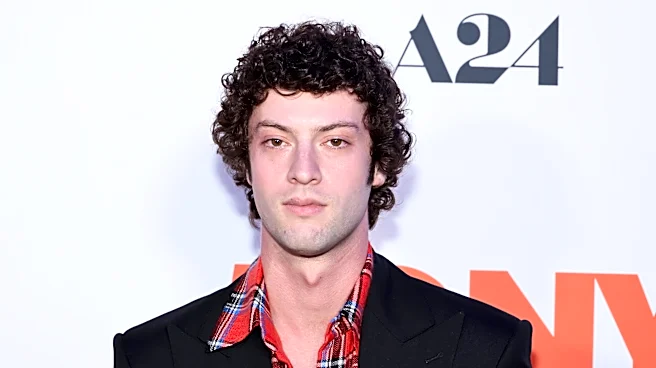
Fielder joining Holmes and her husband Billy Evans in a rented home during the 34 days before she reported to federal prison in May 2023. The documentary then takes an unexpected turn after Holmes goes to prison, with the timeline jumping forward and Fielder engaging in 'Rehearsal-type business,' introducing twists and unexpected guests. The film has been highly reviewed and is now available for purchase on Apple TV and rental on Prime Video.
Why It's Important?
This documentary is significant for its innovative approach to exploring truth and reality, particularly through the lens of a figure like Elizabeth Holmes, whose public narrative has been heavily scrutinized for its deceptive elements. Nathan Fielder's unique style, known for blurring the lines between reality and performance, challenges viewers to question what they perceive as true, a critical skill in an era of widespread misinformation. The film's success and critical acclaim could influence documentary filmmaking by encouraging more experimental and meta-narrative approaches. For the public, it offers a complex examination of a high-profile case, prompting deeper thought about accountability, perception, and the nature of truth itself.
What's Next?
As 'You Can See Everything' gains wider viewership through its availability on streaming platforms, it is expected to generate significant discussion and critical analysis, potentially leading to Oscar nominations. The film's unconventional structure and Fielder's signature style may inspire other filmmakers to experiment with documentary formats. Its exploration of Elizabeth Holmes's story could also reignite public interest in the Theranos scandal and the broader implications of corporate fraud and media representation. The film's impact on how audiences consume and interpret 'truth' in media will be a key area of observation.
Beyond the Headlines
The documentary's core theme revolves around the elusive nature of truth and how it is constructed and perceived, especially in the context of public figures and media narratives. By placing Elizabeth Holmes, a figure synonymous with deception, within Fielder's reality-bending framework, the film creates a powerful meta-commentary on documentary ethics and the audience's role in discerning authenticity. It implicitly questions whether any depiction can be entirely 'true' and encourages a critical stance towards all media. The film's structure, with its unexpected second half, serves as a practical demonstration of how narratives can be manipulated or recontextualized, forcing viewers to confront their own biases and assumptions.