




What's Happening?
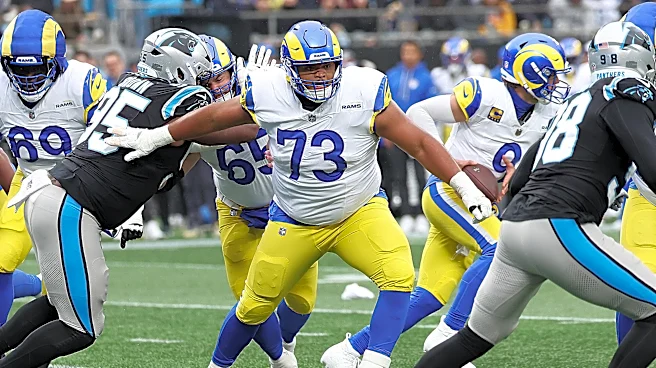
The Los Angeles Rams, under head coach Sean McVay, have set a new NFL record by running 331 offensive plays using three-tight-end personnel during the 2025 season. This strategy, analyzed by Sharp Football Analysis, was nearly triple the number of plays run by the next
closest team, the Pittsburgh Steelers, who ran 145 such plays. The Rams' use of this formation was not just about volume; it was marked by significant efficiency, averaging 8.4 yards per pass play, which is two yards better than the league average of 6.3. This approach has been a departure from McVay's earlier strategies, which focused on using three receivers. The Rams' tight ends, Colby Parkinson, Tyler Higbee, and Terrance Ferguson, have provided a versatile threat, contributing to the team's offensive success alongside their strong receiver and running back lineup.
Why It's Important?
The Rams' innovative use of three-tight-end sets represents a significant shift in NFL offensive strategies, highlighting the potential for increased efficiency and versatility. This approach allows the Rams to create mismatches against defenses, leveraging the dual-threat capabilities of their tight ends. The success of this strategy could influence other teams to adopt similar formations, potentially altering the landscape of offensive play in the NFL. For the Rams, this strategy not only enhances their offensive capabilities but also positions them as a formidable team in the league, capable of adapting and evolving their play style to maintain competitive advantage.
What's Next?
Looking ahead, the Rams are expected to continue utilizing their three-tight-end formation as a core component of their offensive strategy in the 2026 season. With the return of Tyler Higbee on a new two-year deal and the addition of rookie Max Klare, the Rams are poised to maintain a deep and talented tight end roster. This depth suggests that the Rams' reliance on this formation is not a temporary tactic but a foundational element of their offensive playbook. Other teams may observe and potentially emulate this strategy, leading to broader changes in how offenses are structured across the league.