



What's Happening?
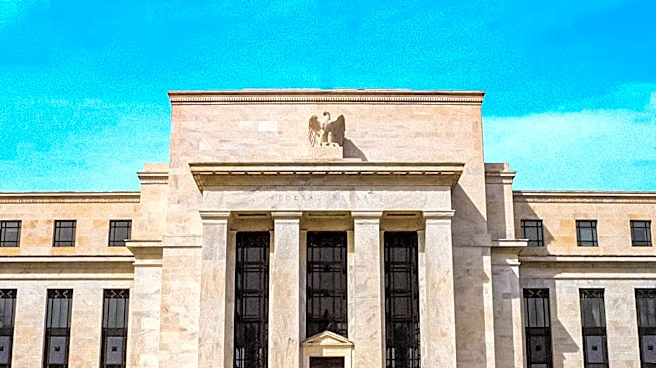
Federal Reserve Governor Lisa Cook has drawn attention to the increasing costs of electricity and water, which have each risen by approximately 5% over the past year. This observation comes in the context of a significant surge in data center construction,
which has grown by 64.5% in the last year. Conversely, manufacturing construction has seen a nearly 24% decline during the same period. Torsten Slok at Apollo has characterized this phenomenon as 'Dutch disease,' where a rapidly expanding sector diverts capital, power, and labor from other parts of the economy. The rising utility costs, coupled with expectations for interest rates to remain elevated, suggest that data center operators will face higher expenses for power and capital for each new facility they develop. This trend indicates a shift in investment priorities within the U.S. infrastructure landscape, with a strong focus on data processing capabilities.
Why It's Important?
The insights from Fed Governor Lisa Cook and Torsten Slok underscore a critical economic shift with broad implications for the U.S. economy. The rapid expansion of data center infrastructure, while indicative of technological advancement and demand for computing power, is creating a competitive environment for essential resources like electricity and water. This could lead to increased operational costs for businesses reliant on these utilities, not just within the tech sector but across the economy. The 'Dutch disease' analogy suggests a potential imbalance where the booming data center industry could strain resources, potentially hindering growth in other vital sectors like manufacturing. Higher interest rates, as anticipated by Slok, will further exacerbate the financial burden on operators, making new investments more expensive and potentially impacting overall economic growth and job creation in diverse industries. This situation highlights a growing tension between technological progress and resource allocation.
What's Next?
The current trends suggest that data center operators will continue to face escalating costs for power and capital. This could lead to increased scrutiny on efficiency within existing data centers, as operators seek to maximize performance from their current infrastructure rather than solely investing in new builds. The potential for 'Dutch disease' to further impact the manufacturing sector may prompt policy discussions regarding resource allocation and economic diversification. Stakeholders, including utility providers, tech companies, and policymakers, will likely need to address the growing demand for electricity and water to support data centers, potentially through investments in renewable energy sources or water conservation initiatives. The Federal Reserve's stance on interest rates will also remain a critical factor, as sustained higher rates will continue to influence investment decisions and operational costs across various industries.
Beyond the Headlines
The rapid growth of data centers and the associated rise in utility costs point to deeper implications for the U.S. economy and society. Ethically, the concentration of resources in one booming sector raises questions about equitable distribution and potential impacts on other industries that are crucial for a balanced economy. Legally, there may be increasing pressure for regulatory frameworks to manage the environmental footprint of data centers, particularly concerning energy consumption and water usage. Culturally, the shift towards a data-intensive economy signifies a long-term transformation in how resources are valued and allocated. This development could trigger long-term shifts in infrastructure planning, energy policy, and even urban development, as regions compete to attract data center investments while managing their environmental and economic consequences. The sustainability of this growth model will likely become a central theme in future economic and environmental discussions.