


What's Happening?
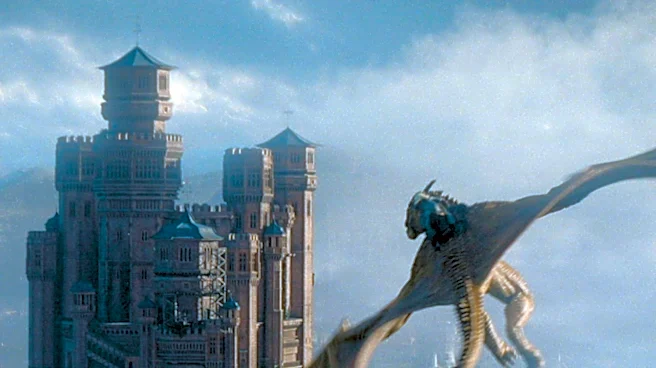
The 'House of the Dragon' Season 3 finale features the Battle of Tumbleton, a significant event that diverges from George R.R. Martin's 'Fire and Blood.' In the show, the battle is depicted with Rhaenyra's forces attacking Tumbleton, reversing the book's
scenario where Ormund Hightower's forces attack. This change allows the show to explore Rhaenyra's moral dilemmas and Ormund's character in greater depth. The episode also introduces new subplots and character dynamics not present in the book, such as Daemon Targaryen's involvement and the search for Ulf the White. These adaptations aim to enhance viewer engagement by focusing on familiar characters and creating new narrative tensions.
Why It's Important?
The deviations from the source material highlight the show's approach to adapting complex narratives for television. By altering key events and character roles, the series aims to maintain dramatic tension and viewer interest. These changes also allow for deeper character development and exploration of themes such as power, loyalty, and betrayal. The show's creative liberties may attract both praise and criticism from fans of the book, influencing its reception and future adaptations. The series' ability to balance fidelity to the source material with innovative storytelling is crucial for its success and longevity.
Beyond the Headlines
The show's adaptations raise questions about the nature of storytelling and the balance between source material fidelity and creative interpretation. These changes may reflect broader trends in television adaptations, where narrative adjustments are made to suit the medium and audience expectations. The series' approach to character development and plot restructuring could influence future adaptations of literary works, setting precedents for how complex narratives are translated to screen. Additionally, the show's focus on moral dilemmas and character motivations may resonate with contemporary audiences, reflecting societal themes and concerns.