





What's Happening?
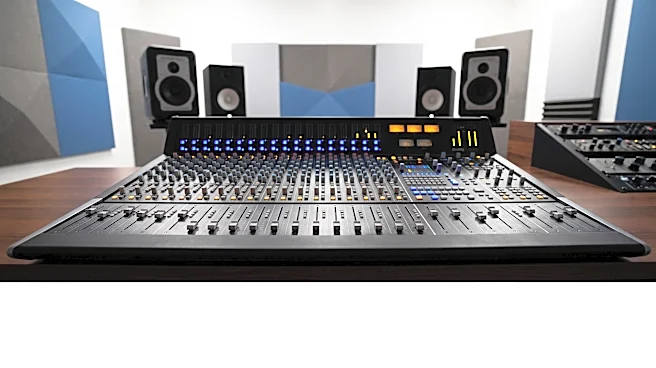
Yamaha has issued free firmware updates for its MGX mixing consoles, URX audio interfaces, and the CC1 DAW controller. These updates introduce new functionalities, with MGX mixers and URX interfaces receiving enhanced EQ and security features. Specifically,
they can now utilize the FLEX12GEQ on stereo and mix output buses, allowing control over twelve out of 31 graphic EQ bands simultaneously. A GEQ-Link function has also been added to transfer EQ settings between linked stereo channels, and RECALL SAFE enables selective parameter and channel saving within scenes. For live operations, a CONSOLE LOCK feature has been implemented to prevent unauthorized access to the user interface. The CC1 DAW controller gains expanded MIDI capabilities, including support for seven MIDI command types like Pitch Bend and Aftertouch, and the new ControlCenter 2, which allows users to create and edit profiles for supported plug-ins and features a Smart-Override function for automatic command assignment. Additionally, CC1 users working with Steinberg Cubase or Nuendo will benefit from improved integration with Focus QC and Control Room functions.
Why It's Important?
These firmware updates are significant for U.S. audio professionals, musicians, and production studios utilizing Yamaha's MGX, URX, and CC1 hardware. The introduction of advanced EQ capabilities, such as the FLEX12GEQ and GEQ-Link, provides greater precision and flexibility in sound engineering, particularly for live sound reinforcement and studio mixing. This can lead to higher quality audio output and more efficient workflow for sound engineers. The security enhancements, like CONSOLE LOCK, are crucial for live event settings, preventing accidental or unauthorized changes during performances, thereby ensuring operational stability. For DAW users, the expanded MIDI functionality and ControlCenter 2 for the CC1 controller streamline the creative process, allowing for more customized and intuitive control over virtual instruments and plug-ins. The improved integration with Cubase and Nuendo further solidifies Yamaha's ecosystem, offering a more cohesive experience for users of these popular DAWs. These free updates extend the lifespan and utility of existing equipment, providing substantial value without additional cost, which is particularly beneficial for small businesses and independent artists in the U.S. audio industry.
What's Next?
Users of Yamaha MGX mixing consoles, URX audio interfaces, and CC1 DAW controllers can immediately download and install these firmware updates from Yamaha's official website. The updates are designed to be free of charge, encouraging widespread adoption among existing hardware owners. The enhanced features, particularly the new EQ and security functions for live sound and the expanded MIDI capabilities for studio work, are expected to be integrated into current and future production workflows. Audio professionals and musicians will likely begin incorporating these new tools into their daily operations, potentially leading to new techniques and improved audio quality in various applications, from live concerts to studio recordings. Yamaha's continued commitment to providing free updates suggests a strategy of enhancing customer loyalty and extending the value proposition of its products, which could influence future purchasing decisions within the U.S. audio equipment market.
Beyond the Headlines
The release of these comprehensive firmware updates by Yamaha highlights a broader trend in the pro audio industry: the increasing importance of software-driven enhancements for hardware. This approach allows manufacturers to extend the functionality and relevance of their products long after the initial purchase, offering continuous value to consumers. For the U.S. market, this means that investments in audio hardware can yield longer-term returns, as devices evolve with new capabilities rather than becoming obsolete quickly. This strategy also fosters a stronger relationship between manufacturers and users, as feedback can inform future software developments. Ethically, providing free updates demonstrates a commitment to customer satisfaction and product longevity, which can build brand trust. From a technological standpoint, the integration of advanced EQ algorithms and sophisticated MIDI control within existing hardware platforms showcases the power of digital signal processing and software engineering in modern audio production, pushing the boundaries of what is achievable with current equipment.