





What's Happening?
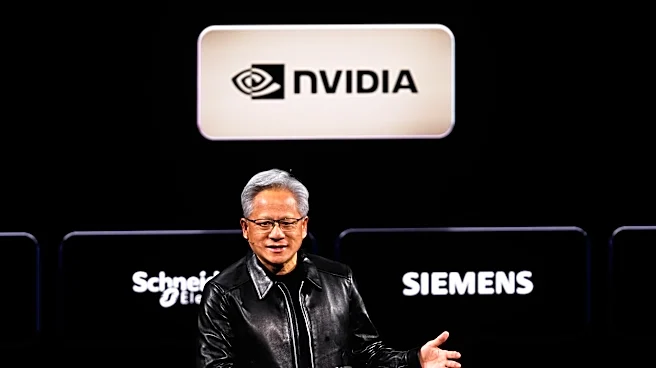
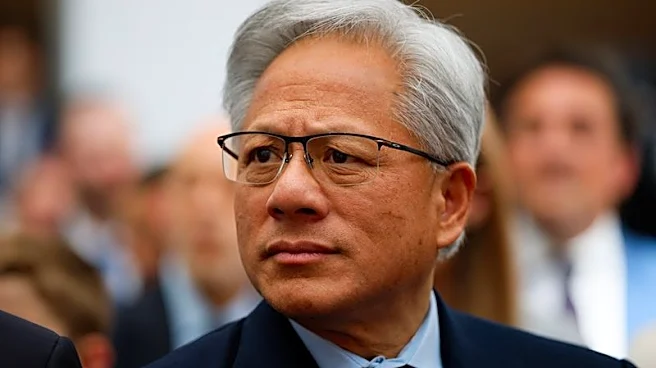
Nvidia and its CEO, Jensen Huang, are facing a shareholder lawsuit alleging they deceived investors regarding Huang's affair with a purported Chinese spy. The complaint, filed by retail investor Mark Kistenmacher in a California court, claims that Nvidia and Huang issued
misleading statements about Huang's relationship with Alice Huang, who is suspected of working for Chinese intelligence. The lawsuit follows media reports about the affair and President Trump's confirmation that the FBI is investigating the matter. The complaint asserts that Nvidia failed to disclose the affair and made false statements about its relationship with Singapore-based Megaspeed, a company linked to Alice Huang, which was allegedly helping to circumvent U.S. export restrictions on Nvidia chips to China. Nvidia's stock experienced a significant drop after these revelations, wiping out approximately $190 billion in market value.
Why It's Important?
This lawsuit highlights significant concerns regarding corporate transparency, national security, and the integrity of financial markets. The alleged deception by Nvidia and its CEO could have severe repercussions for investor confidence and corporate governance. The involvement of a purported Chinese spy and the FBI investigation underscore the growing geopolitical tensions surrounding advanced technology, particularly microchips essential for artificial intelligence development. U.S. export restrictions aim to prevent such technology from falling into the wrong hands, and any alleged circumvention poses a direct threat to national security. For Nvidia, a leading company in the AI sector, the scandal could damage its reputation, impact its business operations, and potentially lead to further legal and regulatory scrutiny, affecting its market position and future growth.
What's Next?
The shareholder lawsuit will proceed through the California court system, with the plaintiff seeking unspecified damages and a jury trial. Nvidia is expected to respond to the allegations, and the legal process could be lengthy. Concurrently, the FBI's investigation into the alleged spy affair will continue, potentially uncovering more details that could impact both the lawsuit and Nvidia's operations. The episode has also attracted congressional scrutiny, with top Democrats expressing interest in further investigation, suggesting potential legislative or regulatory actions. Nvidia's board is also scrutinizing the affair, which could lead to internal changes or disciplinary actions. The company's ability to navigate these legal, governmental, and reputational challenges will be critical for its future, especially given its pivotal role in the rapidly expanding artificial intelligence industry.
Beyond the Headlines
Beyond the immediate legal and financial implications, this case touches upon deeper issues of corporate ethics, personal conduct of executives, and the complex interplay between global business and national security. The alleged use of personal relationships for espionage highlights sophisticated methods employed by foreign adversaries to gain access to sensitive technology. This incident could prompt a re-evaluation of corporate security protocols, executive vetting processes, and the enforcement of export controls in the tech sector. It also underscores the ethical dilemmas faced by companies operating in a globalized world where economic interests often intersect with geopolitical rivalries. The outcome of this case could set precedents for how U.S. companies and their leadership are held accountable for actions that may compromise national security or mislead investors.