




What's Happening?
Keenspot's horror comic, 'The Crying Boy,' is being developed into a feature film by producer Carter Swan, known for his work on 'Resident Evil' and HBO's 'The Last of Us.' Rona Mark is set to write the screenplay for the adaptation. The comic series,
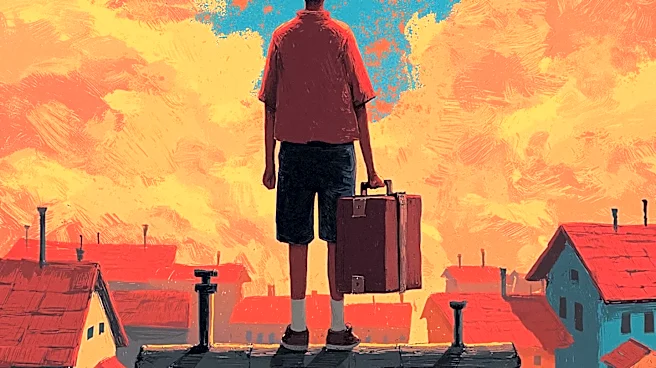
launched in 2024 by writer Niall O’Rourke and artist Rob Moran, tells the story of Nadia and her son Samir, who move to Queens after her husband's death. Samir befriends a painting of a weeping child, which houses an ancient entity that feeds on children's souls. The comic's first issue is already in its third printing, and a deluxe collection is scheduled for 2027. The original legend behind 'The Crying Boy' dates back to 1985 when a British tabloid reported on a mass-market print of a weeping child that was believed to be linked to house fires, leading to public bonfires of the prints.
Why It's Important?
The adaptation of 'The Crying Boy' into a feature film highlights a growing trend in the entertainment industry of drawing inspiration from established, albeit niche, properties and real-world urban legends. This move could bring significant attention to Keenspot, a comic publisher, and potentially open doors for other independent comic creators to have their works adapted for larger screens. For the horror genre, it signifies a continued interest in stories that blend supernatural elements with psychological dread, tapping into primal fears surrounding childhood and parental anxieties. The film's success could influence future investment in horror content that leverages existing folklore or internet-era creepypastas, offering a fresh narrative approach compared to traditional horror franchises. The involvement of a producer like Carter Swan, with a track record of successful adaptations, suggests a strategic effort to elevate the project's profile and appeal to a broader audience.
What's Next?
With Rona Mark attached as the screenwriter, the next phase will likely involve script development and refinement. The project is currently without a director or a studio, so the subsequent steps will include securing a director and a distribution deal. Given the comic's existing fanbase and the producer's reputation, there will likely be significant interest from studios looking to capitalize on the horror genre's consistent box office performance. Further announcements regarding casting and production timelines are anticipated once these key creative and financial partnerships are established. The success of the film adaptation could also lead to increased sales and visibility for 'The Crying Boy' comic series, potentially spurring more issues or spin-off content from Keenspot.
Beyond the Headlines
The story of 'The Crying Boy' delves into the psychological impact of urban legends and mass hysteria, as evidenced by the real-world panic in 1985 that led to public burnings of the original prints. The film adaptation has the potential to explore these themes, examining how fear can be collectively manufactured and perpetuated through media and folklore. It could also touch upon the ethical implications of exploiting such legends for entertainment, while simultaneously offering a commentary on the human tendency to seek supernatural explanations for unexplained phenomena. The narrative's focus on a child's vulnerability and a parent's desperation could resonate deeply, tapping into universal anxieties about protecting one's offspring and the lengths one might go to in the face of tragedy. This adaptation could serve as a cultural touchstone, reigniting discussions about the power of belief and the enduring appeal of cautionary tales.