






What's Happening?
Senator Eric Schmitt, a Republican from Missouri, has expressed confidence that a significant piece of federal college sports legislation, known as the Protect College Sports Act, is likely to secure the necessary 60 votes to pass in the Senate. This
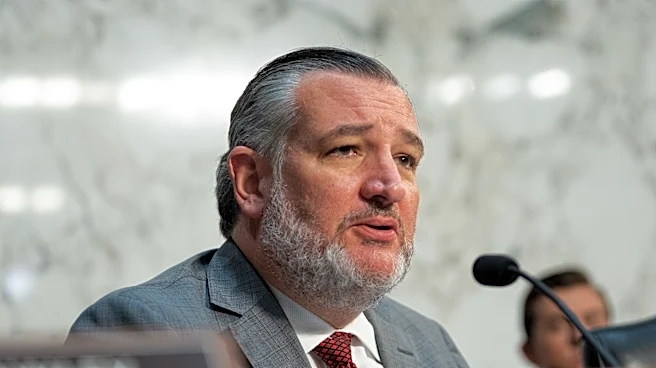
announcement was made during the Associated Press Sports Editors meeting. The bill, sponsored by Senators Ted Cruz and Maria Cantwell, aims to address the complexities surrounding payments to college athletes for their name, image, and likeness (NIL). The legislation seeks to provide limited liability protection to the NCAA and conferences while preempting the varied state laws governing NIL payments. Despite opposition from major conferences like the Southeastern and Big Ten, negotiations are ongoing to amend the bill to gain broader support. The bill also proposes allowing conferences to pool media rights, a move that could potentially generate significant revenue, though it is not supported by all stakeholders.
Why It's Important?
The passage of the Protect College Sports Act is crucial as it addresses the ongoing challenges in compensating college athletes for their NIL, a topic that has been contentious since a federal court approved such payments last summer. The legislation aims to create a uniform framework across states, reducing the legal complexities and potential litigations that arise from the current patchwork of state laws. If successful, the bill could stabilize the financial landscape of college sports, potentially preventing the dissolution of women's sports teams due to financial strain, as predicted by Senator Schmitt. The outcome of this legislation could significantly impact the NCAA, college athletes, and the broader college sports ecosystem, influencing how athletes are compensated and how media rights are managed.
What's Next?
The next two weeks are critical for the Protect College Sports Act as negotiations continue to secure the necessary support from key stakeholders, including the Southeastern and Big Ten Conferences. If the bill passes the Senate, it will face further challenges in the House, where bipartisan concerns have previously stalled similar legislation. The outcome of these negotiations and the subsequent legislative process will determine the future regulatory framework for NIL payments in college sports. Stakeholders, including college athletes, universities, and sports conferences, will be closely monitoring the developments, as the bill's passage could lead to significant changes in the college sports landscape.