






What's Happening?
The Peterson Institute for International Economics (PIIE) projects a slowdown in China's economic growth, with forecasts indicating a decline to 4.6% in 2026 and 4.3% in 2027. This revised outlook comes as China grapples with persistent domestic economic challenges,
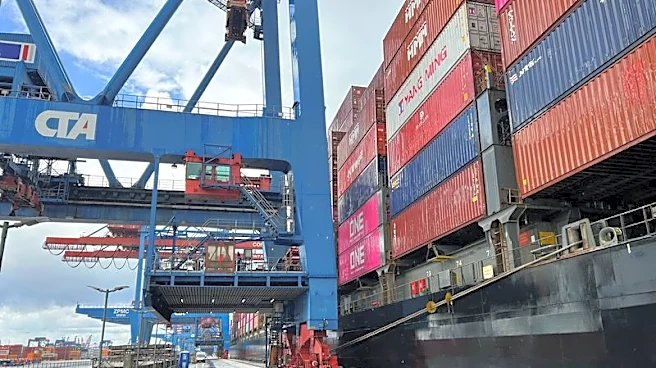
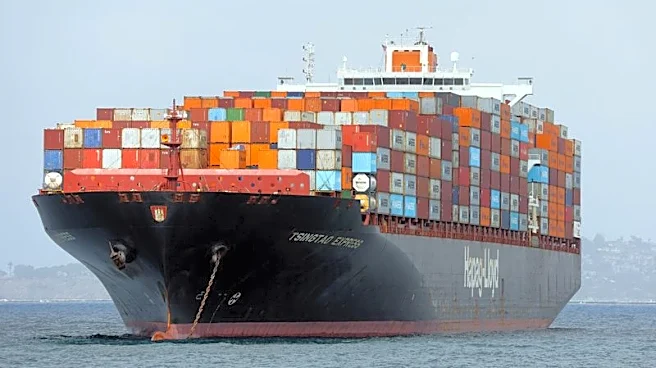
including weak household spending and a prolonged property downturn. Additionally, increasing trade barriers are expected to erode China's export momentum, which has historically been a crucial driver of its economic expansion. The PIIE's forecast for 2026 is slightly higher than its April projection of 4.5%, while the 2027 forecast remains unchanged. This assessment highlights the growing difficulties Beijing faces in achieving its growth targets, which currently range from 4.5% to 5%. The institute notes that while China has benefited from supplying goods for the global artificial intelligence infrastructure boom, it is not immune to the impact of trade restrictions.
Why It's Important?
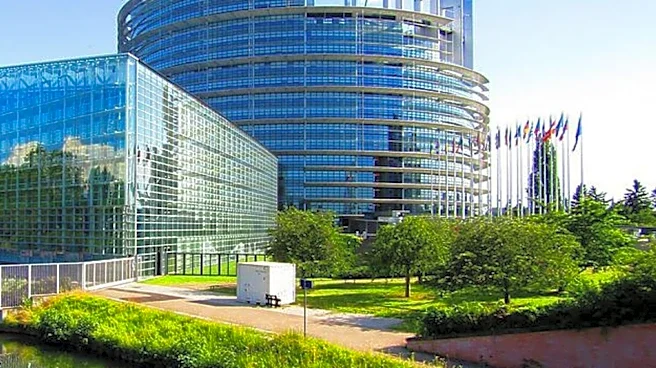
This forecast from the Peterson Institute for International Economics is significant because it underscores the structural challenges facing the Chinese economy, which could have ripple effects on global trade and economic stability. A sustained slowdown in China's growth, driven by internal demand issues and external trade pressures, could impact U.S. businesses that rely on Chinese markets for exports or as part of their supply chains. The potential for increased trade barriers, particularly from the European Union targeting Chinese hybrid vehicle imports, signals a broader shift in international trade relations that could affect global manufacturing and supply chain strategies. For the U.S., a weaker Chinese economy might reduce demand for American goods and services, while increased trade tensions could lead to higher costs for consumers and businesses due to tariffs and disrupted supply chains. The situation also highlights the ongoing debate about global economic interdependence and the strategies countries are employing to protect domestic industries.
What's Next?
China's government is expected to continue exploring measures to stimulate household spending and address the property market downturn, with attention turning to the upcoming party plenum for potential policy announcements. The finance minister has indicated that additional fiscal policies are under consideration. Internationally, negotiations between the European Union and China regarding trade imbalances, particularly concerning hybrid vehicles, are ongoing. The outcome of these talks could set a precedent for how wider trade disputes are addressed. If negotiations fail, the EU may implement broader restrictions, potentially including tariff-rate quotas, which could escalate trade tensions. Major stakeholders, including political leaders, businesses, and civil society groups, will be closely monitoring these developments for their implications on global trade, investment, and economic stability. The central challenge for Beijing remains whether household spending can strengthen sufficiently to offset weaker exports and the property sector's drag.
Beyond the Headlines
The PIIE's forecast points to a deeper structural issue within the Chinese economy: its reliance on foreign demand in the face of insufficient domestic consumption. This imbalance raises questions about the long-term sustainability of China's economic model and its ability to transition to a more consumption-driven economy. The increasing willingness of foreign governments to impose trade restrictions, as seen with the EU's actions regarding hybrid vehicles, suggests a global shift towards protecting domestic industries and addressing perceived trade imbalances. This could lead to a more fragmented global trade environment, potentially impacting the efficiency and cost-effectiveness of international supply chains. The ethical and political dimensions of trade relations, including concerns about fair competition and market access, are becoming more prominent. The situation also highlights the complex interplay between economic policy, geopolitical considerations, and the evolving landscape of global commerce, with potential long-term implications for international cooperation and economic integration.