
What's Happening?
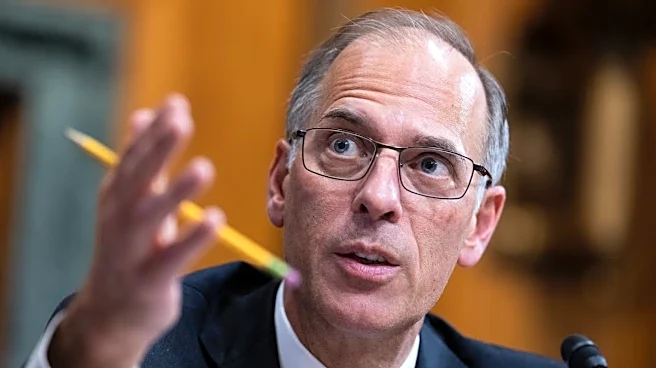
The U.S. Department of the Treasury announced on September 28 the appointment of David Zervos, formerly the Chief Market Strategist at Jefferies, as a counselor in the Treasury Secretary's office. Zervos, who
spent nearly two decades at Jefferies and previously served as an economist at the Federal Reserve Board, is taking on this role as a 'special government employee,' which does not require Senate confirmation. He is expected to serve until April 2027. This appointment comes at a time when the long-term U.S. bond market is experiencing significant challenges, with Goldman Sachs' Rich Privorotsky noting a lack of demand for long-term U.S. bonds. The 10-year Treasury yield reached 5.34% on October 1, its highest since 2002, and remained near 5.28% on October 2. Despite some easing in short-term rate hike expectations, the long end of the yield curve has not found relief. Zervos indicated that the Treasury is aiming to regain control over debt maturity management, suggesting a potential shift in the issuance strategy for short and long-term bonds, though official details are yet to be disclosed.
Why It's Important?
The appointment of David Zervos to the U.S. Treasury is significant given the current volatility and lack of demand in the long-term U.S. bond market. His expertise as a market strategist and former Federal Reserve economist could be crucial in navigating the complex landscape of rising Treasury yields and investor apprehension. The Treasury's previous attempt to double its long-bond buyback program to $4 billion in August did not prevent yields from climbing, indicating that a more comprehensive strategy is needed. Zervos's involvement suggests the Treasury might be preparing to actively adjust the maturity structure of its debt issuance, potentially by altering the proportion of short-term versus long-term bonds. This could impact borrowing costs for the U.S. government and influence broader market sentiment. If the Treasury can effectively manage bond maturities and restore investor confidence, it could stabilize yields and reduce the risk of further market disruption. Conversely, if these efforts are insufficient, the bond market could face continued pressure, affecting everything from mortgage rates to corporate borrowing costs.
What's Next?
The U.S. Treasury is expected to clarify its strategy regarding debt maturity management following David Zervos's appointment. While specific plans have not been announced, Zervos's comments suggest a proactive approach to adjusting the issuance ratio of short-term and long-term bonds. Market participants will closely monitor any official statements or actions from the Treasury that indicate changes in its debt management policies. The effectiveness of these measures will be crucial in determining whether the current pressures on long-term U.S. bonds can be alleviated. Analysts like Simon White of Bloomberg Macro Strategy believe that official intervention might only make short-selling more risky without providing sufficient buying incentives, potentially leaving investors in a difficult position. The market's reaction to any new Treasury initiatives will be a key indicator of their perceived success and could influence future bond yields and overall market stability.
Beyond the Headlines
Beyond the immediate market implications, David Zervos's appointment highlights a deeper concern about the U.S. government's fiscal health and the sustainability of its debt. The current environment, characterized by high real yields and a significant U.S. deficit-to-GDP ratio (ranking fifth among major economies), suggests underlying structural issues. The potential for bond and stock markets to move in tandem if the 10-year yield remains elevated (between 5.25% and 5.50%) could erode bonds' traditional role as a risk diversifier, increasing overall market volatility. Furthermore, rising volatility could lead to tighter margin requirements and position limits, potentially exacerbating selling pressure. The Treasury's efforts to manage debt maturities are not just about short-term market stability but also about addressing the long-term fiscal challenges that could impact the U.S. economy's resilience and its attractiveness to global investors. The success or failure of these strategies could set precedents for how governments manage debt in an era of persistent inflation and high deficits.