









What's Happening?
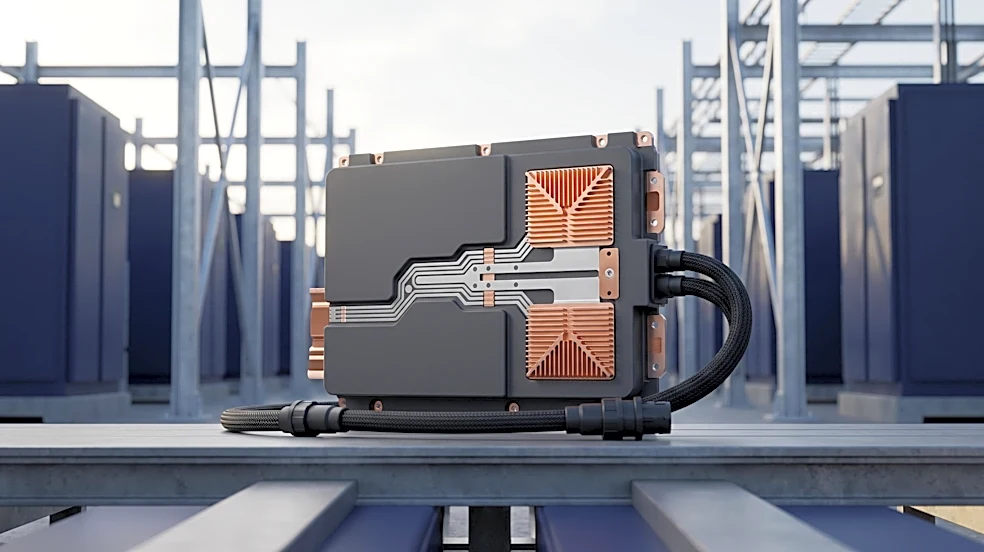
ON Semiconductor (ON) has seen renewed focus following Sungrow's selection of its EliteSiC silicon carbide hybrid power modules for the new PowerTitan 3.0 utility-scale energy storage platform. This partnership highlights ON Semiconductor's role in high-efficiency
grid storage technology. The company's share price has increased by 10.66% over the past month, indicating a rebuilding of momentum after a weaker period, despite a 15.65% drop over the last three months. Year-to-date, the share price has returned 29.98%, and its one-year total shareholder return stands at 40.30%. Analysts currently value ON Semiconductor at $104.46, suggesting it is 29% undervalued compared to its recent closing price of $73.70. This valuation is driven by the broader power and AI grid thesis, with the Sungrow deal being a significant component. The company's investments in silicon carbide, vertical GaN, and the Embedded Power Platform are now linked to a larger AI data center opportunity, with management revising its 2030 server and AI data center market estimate from approximately US$12 billion to nearly US$50 billion.
Why It's Important?
This development is significant for the U.S. semiconductor industry as it underscores the growing demand for high-efficiency power solutions in both renewable energy storage and artificial intelligence data centers. ON Semiconductor's strategic focus on silicon carbide and GaN technologies positions it to capitalize on these expanding markets. The increased market estimate for AI data centers, now projected at nearly US$50 billion by 2030, indicates a substantial growth opportunity for companies providing essential components. The partnership with Sungrow, a major player in energy storage, validates ON Semiconductor's technological capabilities and strengthens its market position. This could lead to increased revenue and margin expansion for the company, benefiting its shareholders and potentially attracting further investment in the U.S. semiconductor sector. The shift towards more efficient power modules is crucial for reducing energy consumption and improving the performance of critical infrastructure, aligning with broader national goals for energy independence and technological advancement.
What's Next?
ON Semiconductor aims to achieve AI data center revenue growth at least 10 percentage points faster than the overall market, which could significantly influence its long-term financial performance. The company's continued investments in silicon carbide, vertical GaN, and the Embedded Power Platform will be critical in realizing this growth. Future developments will depend on the sustained demand for electric vehicles and the successful scaling of AI-focused power products and the Synaptics deal. The company will need to navigate potential risks, such as a weakening EV market or challenges in integrating new technologies, to maintain its current momentum. Investors and industry observers will be closely watching for further announcements regarding new partnerships, product innovations, and financial results to assess the company's trajectory in these rapidly evolving sectors. The broader semiconductor market will also be influenced by global supply chain dynamics and technological advancements in AI and renewable energy.
Beyond the Headlines
The increasing adoption of silicon carbide and GaN technologies, as exemplified by ON Semiconductor's advancements, represents a deeper shift in the power electronics landscape. These materials offer superior efficiency and performance compared to traditional silicon-based components, which is vital for the energy-intensive demands of AI data centers and large-scale energy storage. This technological evolution has broader implications for national energy infrastructure, potentially leading to more resilient and sustainable power grids. Furthermore, the emphasis on high-performance materials in compact device designs, as seen in the electronics and semiconductor manufacturing sectors, highlights a continuous drive towards miniaturization and efficiency across various industries. The competitive advantage in the semiconductor market is evolving beyond just cost, now encompassing compute performance, memory bandwidth, optical connectivity, manufacturing priority, and long-term supply resilience. This holistic approach to semiconductor development is crucial for maintaining technological leadership and ensuring robust supply chains in an increasingly complex global environment.