





What's Happening?
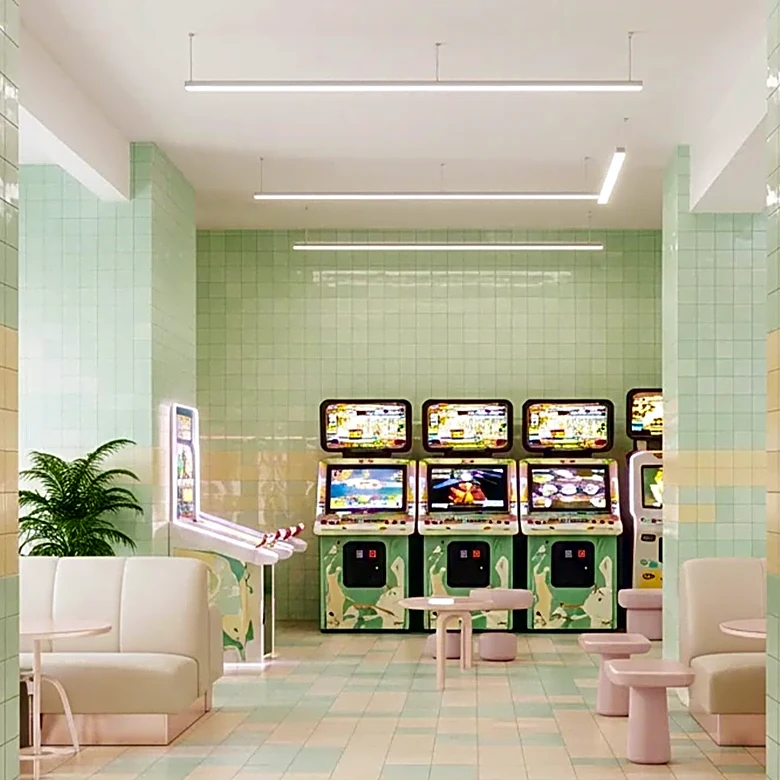
Unity has introduced Surface Cache Global Illumination (GI) within its Universal Render Pipeline (URP). This new technology is designed to calculate indirect diffuse lighting in real-time as an application runs, eliminating the need for pre-baked lighting.
Surface Cache GI is presented as a replacement for traditional baked global illumination, offering dynamic lighting that responds to changes in lights and geometry without requiring a re-bake. The feature comes with specific requirements and limitations, which developers need to consider to determine its suitability for their projects. Unity provides documentation and resources for setting up, tuning quality and performance, and troubleshooting common issues like missing indirect lighting, noise, and light leaking.
Why It's Important?
The introduction of Surface Cache Global Illumination by Unity is significant for game developers and creators utilizing the Universal Render Pipeline. By enabling real-time indirect lighting, it allows for more dynamic and visually responsive environments, which can enhance the realism and immersion of games and interactive applications. This capability can streamline development workflows by reducing the time spent on baking lighting, especially in projects with frequently changing scenes or dynamic lighting conditions. Developers can now achieve more sophisticated lighting effects without the performance overhead typically associated with real-time global illumination, provided they manage the quality and performance settings effectively. This advancement could lead to higher visual fidelity in URP-based projects across various platforms.
What's Next?
Developers using Unity's Universal Render Pipeline are expected to begin integrating Surface Cache Global Illumination into their projects. Unity will likely continue to refine and optimize this feature, addressing any performance bottlenecks or limitations identified by the developer community. Future updates may include enhanced tools for tuning quality and performance, as well as more comprehensive guides for troubleshooting and advanced usage. The adoption of this technology could influence the visual standards for real-time rendering in games and simulations, pushing other game engines to develop similar dynamic lighting solutions. The focus will be on balancing visual quality with per-frame cost to ensure broad applicability across different hardware specifications.
Beyond the Headlines
The shift towards real-time global illumination, as exemplified by Unity's Surface Cache GI, represents a broader trend in computer graphics towards more dynamic and less pre-computed rendering techniques. This evolution has implications beyond gaming, potentially impacting architectural visualization, virtual reality, and film production, where real-time feedback on lighting changes is highly valuable. The ethical consideration lies in the increasing demand for computational resources, which could lead to higher energy consumption for rendering complex scenes. Legally, the intellectual property surrounding such advanced rendering techniques will continue to be a key area for innovation and competition among technology companies. Culturally, this technology contributes to the ever-blurring line between virtual and physical realities, offering increasingly immersive digital experiences.