





What's Happening?
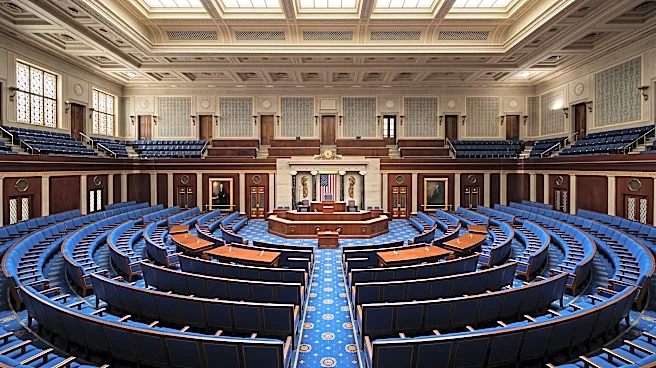
The U.S. House of Representatives has unanimously passed bipartisan legislation, co-led by Congressman Raja Krishnamoorthi (D-IL), aimed at strengthening federal investigations and prosecutions of international trade crimes. The bill, known as the Protecting
American Industry and Labor from International Trade Crimes Act (PAIL Act), seeks to address issues such as tariff evasion, illegal transshipment, and forced labor violations. It proposes establishing a dedicated structure within the Justice Department’s Criminal Division to investigate and prosecute these offenses. Supporters of the legislation, including Congressman Krishnamoorthi, emphasize that these trade crimes harm American workers and industries, particularly those competing against companies that allegedly circumvent U.S. trade laws. The bill also aims to enhance coordination and training among federal, state, and local law enforcement agencies involved in handling international trade violations.
Why It's Important?
This bipartisan legislation is crucial for protecting American economic interests and ensuring fair competition in the global marketplace. International trade crimes, such as tariff evasion and forced labor, can significantly disadvantage U.S. manufacturers and workers by undermining domestic industries and leading to job losses. By providing the Justice Department with dedicated resources and expertise, the PAIL Act aims to hold repeat offenders accountable and deter future violations. The bill's focus on strengthening enforcement against practices by companies that allegedly violate U.S. trade laws, particularly those based in China, highlights its strategic importance in addressing geopolitical economic challenges. The unanimous passage in the House signals strong bipartisan support for robust trade enforcement, which could lead to a more level playing field for American businesses and a stronger domestic economy.
What's Next?
The PAIL Act must now pass the Senate before it can be sent to the President for signature to become law. Congressman Krishnamoorthi has urged the Senate to approve the legislation promptly. If enacted, the bill would require the U.S. Attorney General to submit an annual report to Congress detailing the Justice Department’s enforcement efforts against trade crimes. This reporting mechanism would provide ongoing oversight and accountability for the new enforcement structure. The successful implementation of the PAIL Act could lead to increased investigations and prosecutions of trade-related offenses, potentially resulting in significant penalties for companies found in violation. This could also encourage other countries to adhere more closely to international trade norms and reduce unfair trade practices, ultimately benefiting American workers and manufacturers.
Beyond the Headlines
The passage of the PAIL Act reflects a growing consensus in Congress regarding the need for more aggressive measures to combat unfair trade practices and protect American industries. Beyond its immediate impact on trade enforcement, this legislation carries broader implications for U.S. foreign policy and economic relations, particularly with countries accused of trade law violations. It underscores a strategic shift towards using legal and enforcement tools to address economic competition and national security concerns. The bill's emphasis on forced labor violations also highlights ethical considerations in global supply chains, aligning U.S. trade policy with human rights principles. This could set a precedent for future legislation that integrates economic, ethical, and national security objectives, shaping the future of international trade and U.S. industrial policy.