
What's Happening?
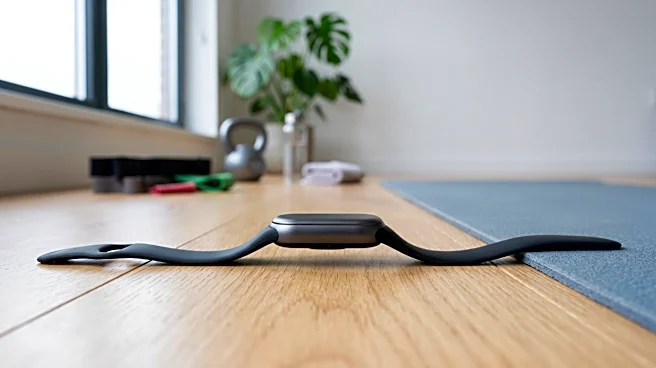
The Whoop 5.0 fitness tracker, a screen-free device, focuses on providing detailed recovery insights through its mobile app. Key metrics tracked include Sleep, Recovery, and Strain scores. The Sleep score is
calculated after waking, while the Recovery score integrates Sleep Performance with Respiratory Rate, Resting Heart Rate, and Heart Rate Variability. The Strain score, ranging from 0.0 to 21.0, increases throughout the day based on Heart Rate Zones, Steps, and Strength Activity Time. A notable feature is Whoop AI (also known as Whoop Coach), a 24/7 health companion within the app that interprets data, explains recovery scores, and offers personalized suggestions. For instance, if a user has a low recovery score after an intense workout, Whoop AI might recommend gentler activities for the following day. The device also demonstrates excellent battery life, lasting over 17 days on a single charge.
Why It's Important?
The Whoop 5.0's emphasis on recovery and AI-driven coaching is significant for individuals in the U.S. focused on optimizing their health and fitness. Many fitness enthusiasts, particularly athletes, tend to overtrain and overlook the critical role of recovery and sleep. Whoop's detailed recovery scores, categorized into Red, Yellow, and Green zones, provide objective data that can help users understand their body's readiness for activity, potentially preventing injuries and improving performance. The integration of AI makes complex physiological data more accessible and actionable, offering personalized guidance that can lead to more informed training decisions. This approach caters to a growing market of consumers seeking advanced, data-driven insights beyond basic activity tracking, influencing how individuals manage their physical well-being and training regimens.
What's Next?
The continued development and adoption of devices like the Whoop 5.0 suggest a trend towards more personalized and AI-integrated health and fitness tracking. As users become more accustomed to receiving detailed physiological insights and AI-driven coaching, there will likely be increased demand for similar features from other wearable technology companies. Whoop's subscription-based model, which includes the device, indicates a shift towards recurring revenue models in the fitness tech industry. Future iterations of such devices may incorporate even more sophisticated AI capabilities, potentially integrating with other health data sources or offering predictive analytics for long-term health management. The success of Whoop AI in adapting to external factors, such as illness, also points to a future where fitness trackers offer more holistic and context-aware health guidance.
Beyond the Headlines
The Whoop 5.0's design, which omits a screen, highlights a philosophical shift in wearable technology: moving from immediate, on-wrist data display to a more reflective, app-based analysis. This design choice encourages users to engage with their data more deeply through the app and its AI coach, rather than relying on quick glances at a screen. However, it also means that for real-time workout metrics, users might still need a supplementary device like a sports watch. The device's ability to factor in external information, such as a user reporting a cold, demonstrates the potential for AI in health tech to move beyond raw data interpretation to a more collaborative and understanding role. This raises questions about data privacy and the extent to which users are comfortable sharing personal health details with AI systems for personalized insights.