



What's Happening?
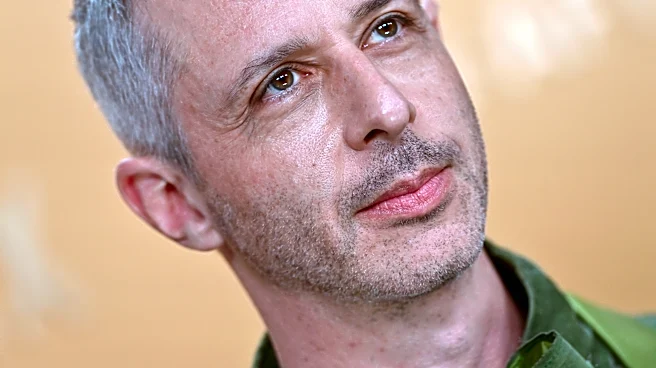
Jeremy Strong starred as Mark Zuckerberg in the 2026 film 'The Social Reckoning,' a follow-up to David Fincher’s 'The Social Network.' The movie, directed by Aaron Sorkin, attempted to dramatize the impact of Facebook and its founder on politics and public
discourse, revisiting the platform through the perspectives of whistleblower Frances Haugen (Mikey Madison) and Wall Street Journal reporter Jeff Horwitz (Jeremy Allen White). The film opened to a disappointing $5.5 million in North America. Critics, including Ryan Lattanzio of IndieWire, described Sorkin's approach as 'less old-fashioned than completely out of date,' criticizing its 'falsely triumphant finale' that failed to acknowledge the lack of real-world change following the investigation's revelations. Strong's portrayal depicted Zuckerberg as 'robotic and cruel,' making decisions based on 'cold cost analysis,' a stark contrast to the more soulful portrayal in the original 'Social Network.'
Why It's Important?
The film's critical reception and low box office performance highlight the challenges Hollywood faces in dramatizing rapidly evolving Silicon Valley narratives. The entertainment industry's struggle to keep pace with real-world tech developments, where individuals like Mark Zuckerberg continue to make headlines, suggests a disconnect between cinematic storytelling and contemporary relevance. This situation raises questions about the efficacy of traditional biographical dramas in capturing the dynamic and often controversial nature of tech moguls and their companies. The portrayal of Zuckerberg as a villain, rather than an antihero, reflects a broader societal shift in perception towards tech leaders, viewing their self-serving worldviews as potentially incompatible with democratic values. This shift could influence future cinematic approaches to tech narratives, pushing for more critical and less romanticized depictions.
What's Next?
The lukewarm reception of 'The Social Reckoning' may lead Hollywood studios to re-evaluate their strategies for producing films about current tech figures and events. Filmmakers might explore alternative narrative structures or genres that can better adapt to the fast-changing tech landscape, potentially moving away from traditional biopics that risk becoming outdated before release. The industry may also face continued pressure to scrutinize its own relationships with AI companies, especially given instances like Amazon MGM dropping Luca Guadagnino’s 'Artificial' due to its critical perspective on AI. This could lead to more independent productions tackling sensitive tech topics or a greater emphasis on documentaries that can offer more immediate and flexible responses to ongoing developments.
Beyond the Headlines
The struggle to effectively dramatize Silicon Valley in films like 'The Social Reckoning' points to a deeper cultural challenge: how society processes and understands the rapid advancements and ethical dilemmas posed by technology. The film's failure to resonate with audiences suggests a fatigue with narratives that simplify complex tech issues or offer resolutions that don't align with lived experiences. This could indicate a growing demand for more nuanced and critical examinations of technology's impact, moving beyond individual personalities to explore systemic issues. The shift from portraying tech founders as flawed visionaries to outright villains in recent films reflects a broader societal disillusionment with the promises of Silicon Valley, prompting a re-evaluation of the ethical responsibilities of tech companies and their leaders.