




What's Happening?
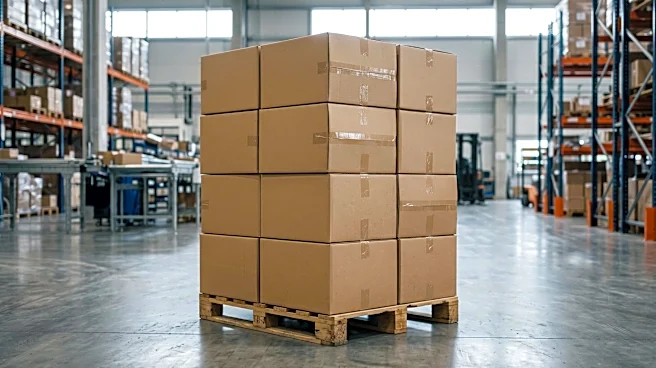
Businesses are at a crossroads when deciding between managing warehousing operations in-house or outsourcing to a Third-Party Logistics (3PL) partner. In-house warehousing involves a business owning or leasing its storage facility, hiring and managing its own staff,
and controlling every aspect of the process, from inventory receipt to picking, packing, and shipping. This model typically includes dedicated warehouse space, internal staff for management and operations, purchasing and maintaining equipment, and managing inventory tracking and quality control internally. Conversely, 3PL warehousing offers flexibility and scalability by outsourcing these functions to an external provider. The decision hinges on factors such as order volume, growth stage, and operational capacity, with each model presenting distinct advantages and trade-offs. In-house warehousing is often favored by businesses with high, consistent order volumes, specialized handling requirements, long-term stability in a specific location, and sufficient internal resources to manage HR, systems, and operations.
Why It's Important?
The choice between in-house and 3PL warehousing significantly impacts a U.S. business's operational efficiency, cost structure, and ability to scale. For businesses with stable, high-volume operations, in-house warehousing provides greater control over the entire fulfillment process, which can be crucial for maintaining specific quality standards or handling specialized products. This control can lead to optimized workflows and potentially lower per-unit costs once fixed overheads are justified. However, it demands substantial upfront investment in facilities, equipment, and personnel, along with ongoing operational management. For growing, seasonal, or expanding businesses, 3PL warehousing offers a more agile solution, allowing them to scale capacity up or down without heavy capital expenditure. This flexibility can be vital in navigating fluctuating market demands, reducing operational risks, and freeing up internal resources to focus on core business activities. The decision directly affects a company's competitive edge, customer satisfaction through efficient delivery, and overall financial health in the dynamic U.S. market.
What's Next?
Businesses must carefully evaluate their current operational needs and future growth projections to determine the most suitable warehousing strategy. This involves a detailed analysis of order volume consistency, the complexity of handling requirements, available internal resources, and long-term strategic goals. Companies considering a shift to 3PL warehousing will need to research and vet potential partners, focusing on their capabilities, technology, and alignment with business objectives. Those opting for in-house solutions will continue to invest in infrastructure, technology, and staff training to optimize their operations. The evolving e-commerce landscape and consumer expectations for faster delivery will likely drive more businesses to re-evaluate their warehousing models, potentially leading to increased adoption of flexible 3PL solutions or hybrid models that combine aspects of both approaches to meet diverse market demands.
Beyond the Headlines
The strategic decision regarding warehousing extends beyond mere logistics; it reflects a company's broader philosophy on control, risk management, and resource allocation. In-house warehousing, while offering complete control, also centralizes operational risks, making the business solely responsible for labor issues, equipment failures, and market fluctuations. Conversely, 3PL partnerships distribute some of these risks, but introduce dependency on an external entity, requiring robust contractual agreements and performance monitoring. This choice also has implications for workforce development, as in-house operations necessitate specialized training and management of a dedicated logistics team, while 3PLs manage their own labor force. The increasing sophistication of warehouse management systems and automation technologies further complicates this decision, as both in-house and 3PL providers are leveraging these advancements to enhance efficiency, requiring businesses to consider technological integration and expertise when making their choice.