



What's Happening?
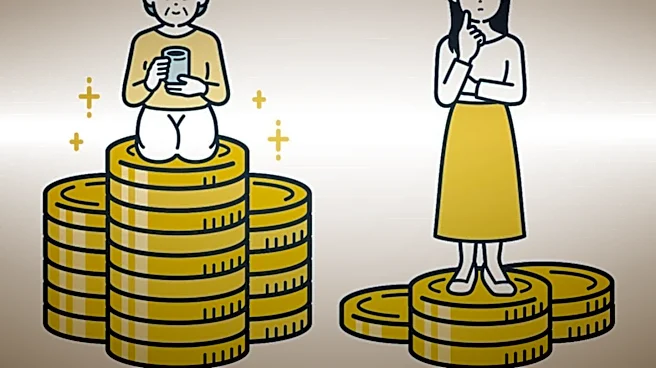
The U.S. economy is experiencing sustained growth, largely propelled by spending from upper-income households. Data from the Bureau of Labor Statistics for 2025 indicates that households in the top income quintile spent an average of $160,000 annually,
which is more than four times the $38,000 spent by households in the lowest quintile. This disparity has widened since 1984, when the top quintile spent three times as much as the lowest. Despite an acceleration in household spending across all income levels post-pandemic, including among lower-income households benefiting from a tight labor market, the gap between the affluent and less affluent has not narrowed. Instead, higher-income households have continued to thrive, contributing significantly to the overall economic expansion. The top two income quintiles collectively accounted for 61% of total spending in 2025, while the bottom two quintiles represented 22%, and middle-class households made up 17%. This trend suggests that the current robust economic growth is heavily reliant on the spending power of wealthier segments of the population.
Why It's Important?
This reliance on upper-income spending for economic growth has significant implications for the U.S. economy and society. While it sustains the current expansion, potentially keeping the growth rate closer to 3% rather than the long-run trend of 1.8%, it also highlights growing income inequality. The wealth effect, driven by high equity valuations, continues to bolster the financial capacity of higher-income groups, enabling their substantial consumption. This dynamic means that economic stability and growth are increasingly tied to the financial health and spending habits of a smaller, wealthier segment of the population. If this trend continues, it could lead to a less resilient economy, vulnerable to shifts in the financial markets that disproportionately affect the wealthy. Furthermore, it suggests that policies aimed at broad-based economic improvement might not be effectively reaching lower and middle-income households, potentially exacerbating social and economic divides. The sustained expansion, while positive on the surface, masks underlying structural issues related to income distribution and economic opportunity.
What's Next?
Forecasters anticipate the U.S. economy will continue to expand, with projections of a 2.3% annual growth rate this quarter and 2.1% next quarter. This sustained growth is expected to be underpinned by the ongoing spending patterns of upper-income households. The current trajectory suggests that as long as these higher-income cohorts maintain their financial strength, supported by factors like equity valuations, the overall economic expansion will persist. However, this also implies that any future economic policies or market shifts that impact the wealth or spending capacity of these affluent groups could have a magnified effect on the broader economy. Policymakers may face increasing pressure to address the widening spending gap and its implications for long-term economic stability and social equity. The focus will likely remain on monitoring consumer spending trends, particularly across different income brackets, to gauge the true health and inclusivity of the economic recovery.
Beyond the Headlines
The disproportionate contribution of upper-income households to U.S. economic growth raises deeper questions about economic equity and the sustainability of the current expansion model. While the immediate benefit is a robust economy, the long-term implications could include increased social stratification and a less diversified economic base. This trend challenges the traditional view of a broad-based consumer-driven economy, suggesting a shift towards a more concentrated economic engine. It also highlights the potential for a 'K-shaped recovery,' where different segments of the population experience vastly different economic outcomes. Ethically, it prompts a discussion about wealth distribution and access to economic opportunities. Legally and politically, it could fuel debates over tax policies, social safety nets, and regulations aimed at fostering more equitable growth. The cultural impact might manifest in increased societal divisions and a perception of economic unfairness, potentially leading to social unrest or demands for significant policy changes to rebalance economic power.