


What's Happening?
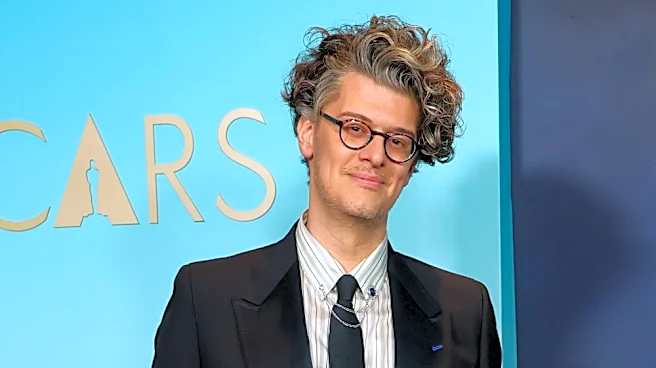
Prosthetic designer Kazu Hiro detailed the intricate process of transforming actor Tom Cruise into the character of Digger Rockwell, a paunchy, aging Texas oilman, for Alejandro González Iñárritu’s film 'Digger.' Hiro, known for his work on Gary Oldman
as Winston Churchill and Charlize Theron as Megyn Kelly, faced unique challenges due to Iñárritu and Cruise's pursuit of perfection and constant desire for new approaches. Hiro developed modular prosthetics that allowed for easy swapping and rearrangement of parts, enabling continuous adjustments to Cruise's look throughout the long preparation period. Initially tasked with creating a 76-year-old character, Hiro quickly adapted when the age was changed to 65. He also created a heavy silicone body prosthetic for an early scene, which Cruise opted to wear throughout the entire production despite its weight, to fully embody the character.
Why It's Important?
This detailed account highlights the extreme dedication and technical artistry involved in cinematic character transformation, particularly when an actor of Tom Cruise's stature commits to such a physically demanding role. The use of advanced prosthetics, as described by Kazu Hiro, demonstrates how practical effects continue to be a vital component of filmmaking, allowing actors to fully immerse themselves in roles that require significant physical alteration. This level of commitment from both the actor and the prosthetic artist contributes to the authenticity and impact of a performance, potentially elevating the film's critical reception and audience engagement. It also showcases the collaborative nature of filmmaking, where technical departments work closely with directors and actors to achieve a shared artistic vision, pushing the boundaries of visual storytelling in cinema.
What's Next?
The success of such transformative prosthetic work in 'Digger' could further solidify Kazu Hiro's reputation as a leading artist in the field, potentially leading to more high-profile projects requiring extensive character makeovers. For Tom Cruise, this role demonstrates his willingness to step outside his typical action-hero persona, which might influence future casting choices and roles he pursues, potentially broadening his artistic range. The film itself, with its emphasis on detailed character portrayal through prosthetics, could spark renewed interest in practical effects within Hollywood, especially as filmmakers seek to create unique visual experiences that stand apart from purely digital alterations. This could encourage more investment in prosthetic design and the development of new techniques in the industry.
Beyond the Headlines
The story of Cruise's commitment to wearing a heavy body prosthetic throughout filming, despite the discomfort, speaks to a deeper aspect of method acting and character immersion. It illustrates how physical discomfort can be embraced by actors as a tool to connect more profoundly with their roles, influencing their movement, posture, and overall presence. This dedication goes beyond mere visual transformation; it delves into the psychological and physical embodiment of a character. Furthermore, the constant iteration and perfectionism described by Hiro reflect the intense pressure and artistic drive present in high-level film productions, where every detail is meticulously crafted to achieve the director's vision. This collaborative pursuit of perfection, even in the face of constant changes, underscores the demanding yet rewarding nature of filmmaking at its highest echelons.