
What's Happening?
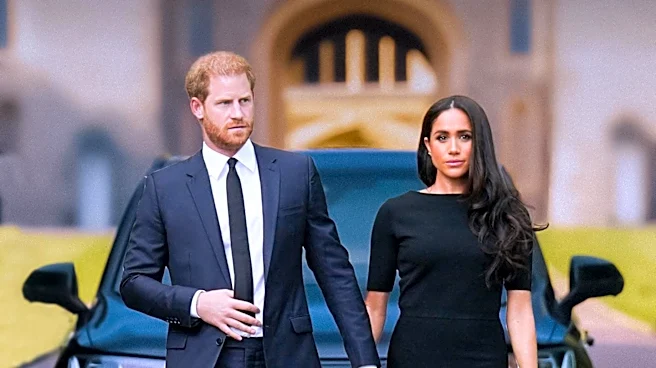
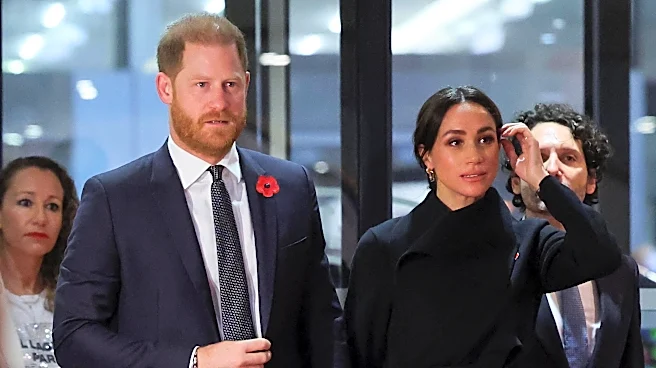
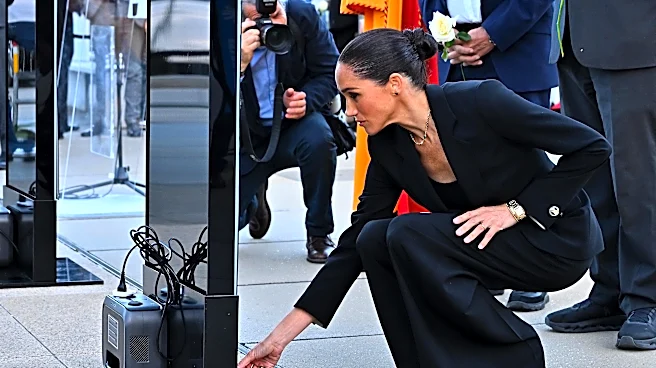
Meghan Markle, the Duchess of Sussex, recently attended the Lost Screen Memorial in Brussels, an event commemorating 50 children who lost their lives due to online harm. For this significant occasion,
she wore a smart, tailored black trench coat by Mackage, paired with Dior earrings. Her choice of attire was noted for its adherence to a strict, unofficial royal fashion rule: wearing black for occasions of mourning or solemnity. This tradition is deeply rooted in royal history, particularly after Queen Elizabeth II's father, King George VI, passed away while she was overseas without a black outfit. Royals are now expected to always have a black ensemble prepared for such unforeseen circumstances. The Duchess's appearance in Brussels marked her first joint overseas outing with Prince Harry since their return to the UK at the end of August.
Why It's Important?
Meghan Markle's adherence to royal fashion protocols, even after stepping back as a senior working royal, underscores the enduring influence of royal traditions and expectations. Her choice to wear black for the Lost Screen Memorial not only conveyed respect for the solemnity of the event but also subtly reinforced her connection to the royal family's established customs. This act can be seen as a strategic move to maintain a dignified public image and avoid potential criticism regarding her conduct or attire, especially given the intense media scrutiny she often faces. For the public, it provides a glimpse into the subtle ways royal etiquette continues to shape the appearances of individuals associated with the monarchy, even in a more independent capacity. It also highlights the symbolic power of clothing in conveying messages of respect and solidarity during sensitive events.
What's Next?
While Meghan Markle's recent appearance demonstrated an adherence to royal protocol, it remains to be seen how consistently she will follow such traditions in future public engagements. Her and Prince Harry's continued public appearances, both individually and together, will likely be scrutinized for similar cues regarding their relationship with royal customs. The couple's ongoing efforts to establish their independent public roles while maintaining a connection to their royal heritage will be a key area of observation. Future events, particularly those with a solemn or formal nature, will offer further opportunities to assess their approach to royal etiquette and public presentation. The public and media will continue to monitor their choices, interpreting them as indicators of their evolving roles and relationships.
Beyond the Headlines
The significance of Meghan Markle's attire extends beyond mere fashion; it touches upon the broader cultural and historical weight of royal traditions. The expectation for royals to wear black during mourning, stemming from a historical incident involving Queen Elizabeth II, illustrates how specific events can shape enduring protocols. This practice highlights the symbolic role of the monarchy in public life, where even sartorial choices carry deep meaning and are subject to public interpretation. For Meghan, navigating these expectations involves balancing personal autonomy with the legacy of the institution she married into. Her decision to respect this tradition, despite her changed status, reflects a nuanced understanding of public perception and the power of visual communication within the royal sphere. It also subtly reinforces the idea that some traditions transcend individual roles, remaining integral to the broader narrative of the monarchy.