



What's Happening?
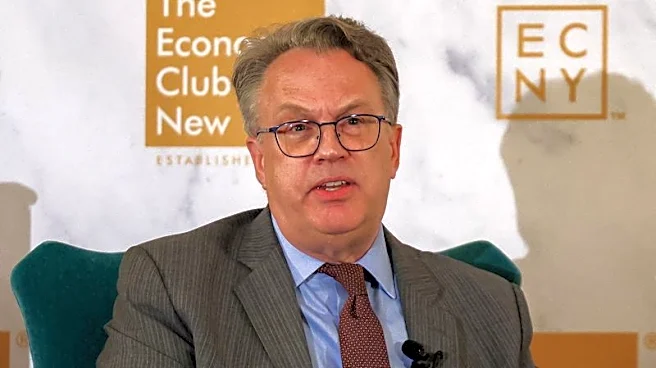
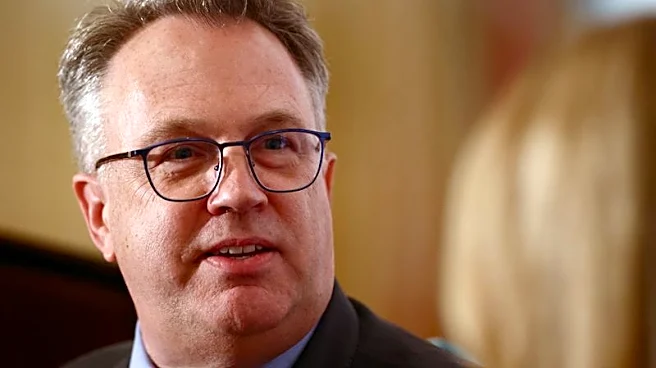
Federal Reserve Chairman Kevin Warsh is contemplating reducing the number of annual meetings held by the Federal Open Market Committee (FOMC), a move that could increase market volatility. Since taking office, Warsh has implemented measures to reduce
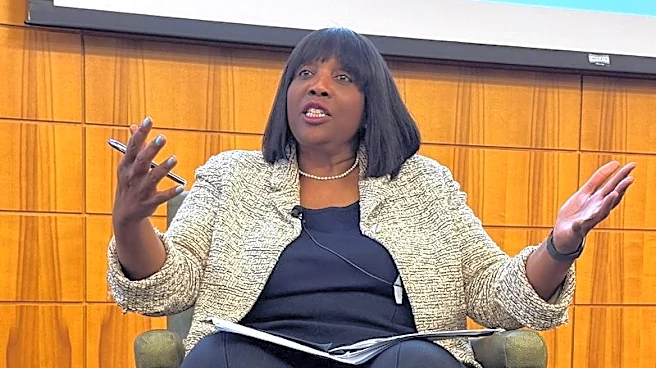
the Fed's influence on financial markets, including curtailing forward guidance and shortening post-meeting statements. The potential reduction in meetings, currently held eight times a year, is seen as a way to further decrease the Fed's communication output. Experts suggest that fewer meetings could lead to increased uncertainty in stock and bond markets, as market participants would have less guidance on future monetary policy. Minneapolis Fed President Neel Kashkari and Philadelphia Fed President Anna Paulson have expressed openness to re-evaluating the meeting schedule, noting that emergency meetings can be called if necessary.
Why It's Important?
The potential reduction in FOMC meetings could have significant implications for financial markets. With less frequent communication from the Fed, investors may face increased uncertainty, leading to greater market volatility. This could result in wider dispersion of outcomes as market participants hedge against unknowns. The change could also impact how investors react to economic data, as they would need to rely more on data rather than Fed guidance. While some see this as an opportunity for new trading strategies, others warn that it could disrupt market stability. The move reflects a shift in the Fed's approach to transparency and communication, which has been a cornerstone of its policy strategy for decades.
What's Next?
If the Fed decides to reduce the number of meetings, it will need to carefully manage the transition to avoid market disruptions. The decision could prompt reactions from investors, policymakers, and financial analysts, who may call for more clarity on the Fed's policy direction. The Fed may also need to enhance other forms of communication, such as press conferences or economic projections, to compensate for the reduced meeting schedule. Additionally, the impact on long-term interest rates and inflation expectations will be closely monitored, as these factors could influence broader economic conditions.