






What's Happening?
Court filings from a shareholder lawsuit against Intel reveal that the Trump administration pressured the company to grant the U.S. government a 10% stake. This demand was reportedly made in exchange for releasing $8.9 billion in grants that Intel had
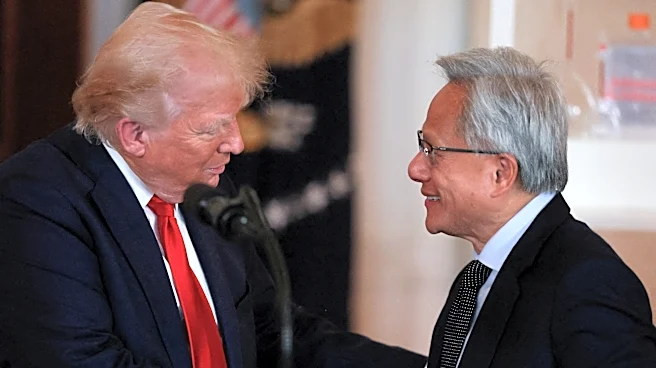
already been awarded. According to internal notes cited in a federal lawsuit, Commerce Department lawyer David Shapiro informed Intel's chief financial officer in August 2025 that the proposal was not open to negotiation and that President Trump expected to announce the deal that Friday. Shapiro reportedly warned that rejecting the offer would have unpredictable consequences. Days later, Intel's board agreed to the deal, after which President Trump announced that the U.S. owned and controlled 10% of Intel, acquired without payment and valued at approximately $11 billion. The lawsuit, filed by Intel shareholder Richard Paisner, alleges that the board 'caved to the government’s extortion' under the shadow of President Trump’s threats. This occurred amidst scrutiny of Intel CEO Lip-Bu Tan's investments in Chinese technology firms, some with military ties.
Why It's Important?
This event underscores a significant shift in the U.S. government's engagement with private industry, particularly in strategically vital sectors like semiconductors. The alleged demand for an equity stake in Intel in exchange for previously awarded grants raises concerns about the independence of corporations and the potential for government overreach. This could influence how companies, especially those receiving federal funding, make strategic decisions and manage their assets. The focus on Lip-Bu Tan's connections to China highlights the ongoing geopolitical tensions and the U.S. government's efforts to secure its technological supply chains and intellectual property. This situation could impact the willingness of executives with international ties to lead major U.S. tech firms, potentially leading to a more cautious approach to global investments. The shareholder lawsuit also brings to light questions about corporate governance and the responsibilities of boards when faced with intense government pressure.
What's Next?
The shareholder lawsuit against Intel's board will continue to unfold, potentially bringing more details to light regarding the interactions between the Trump administration and Intel. The outcome of this legal challenge could establish precedents for how government-corporate relations are managed, especially concerning federal grants and equity demands. The broader implications for U.S. industrial policy, particularly under the CHIPS Act, will likely be a subject of ongoing debate. Future administrations may need to clarify the terms and conditions of government funding to avoid similar disputes. The semiconductor industry, already a critical area of national security and economic competition, will likely continue to face heightened scrutiny and potential government intervention. Companies in this sector may need to re-evaluate their strategies for engaging with government funding and managing international partnerships.
Beyond the Headlines
The alleged actions by the Trump administration could signal a more assertive and direct role for the U.S. government in the private sector, moving beyond traditional regulatory frameworks to direct financial and ownership interventions. This could fundamentally alter the landscape of corporate autonomy and the balance of power between the state and private enterprise. The scrutiny of Lip-Bu Tan's China ties reflects a broader trend of increasing geopolitical considerations in business decisions, where national security concerns can override purely economic rationales. This could lead to a more fragmented global economy, with companies facing pressure to align their operations with national interests. The ethical dimensions of government 'extortion,' as alleged in the lawsuit, raise profound questions about the rule of law and the protection of private property rights in a context of perceived national emergency or strategic imperative. This could have long-term implications for investor confidence and the attractiveness of the U.S. as a place for business.