






What's Happening?
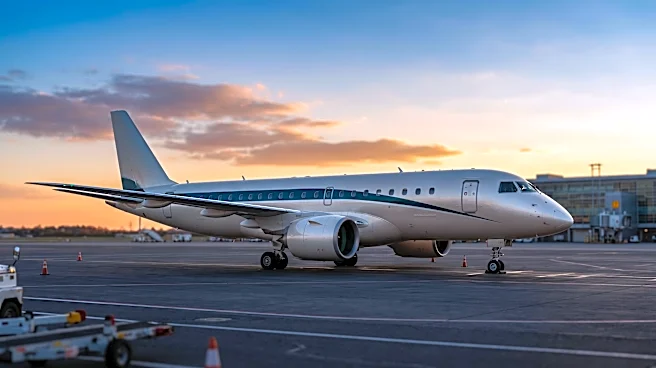
LATAM Airlines Brazil has taken delivery of the first of 12 Embraer E195-E2 jets, marking a significant step in its strategy to expand its domestic network and reach smaller, previously unserved cities. This delivery is part of a larger order for up to 74
of these aircraft, with 12 more scheduled for 2027. The E195-E2, the largest in Embraer’s second-generation E-Jets family, is expected to enter service between November 2026 and March 2027, following final certification by Brazil’s Civil Aviation Agency (ANAC) and customs/cabin interior approvals. The airline aims to surpass 70 airports served in Brazil by 2027, up from 63 currently, by deploying these fuel-efficient aircraft. The E195-E2 offers up to 30% lower fuel burn compared to first-generation E-Jets, a range of 3,000 nm, and advanced fly-by-wire avionics. The cabin features 136 eco-leather seats in a 2-2 configuration, including up to 20 premium economy seats, USB-C ports, and free WiFi.
Why It's Important?
While this news primarily concerns LATAM Airlines Brazil, it holds relevance for the U.S. aviation industry and manufacturers like Boeing and Airbus, as it reflects broader trends in fleet modernization and regional connectivity. The Embraer E195-E2's fuel efficiency and capacity for thinner routes demonstrate a strategic shift towards optimizing regional operations, a model that could influence U.S. domestic carriers. The success of Embraer, a Brazilian aerospace company, in securing significant orders from a major Latin American airline highlights the competitive landscape for regional jets, where U.S. manufacturers also vie for market share. Furthermore, the emphasis on passenger comfort features like no middle seats, USB-C ports, and in-flight entertainment sets a standard that U.S. airlines might need to consider to remain competitive, especially for regional travel. This development also showcases the ongoing global demand for modern, efficient aircraft, which indirectly benefits the U.S. aerospace supply chain and technology providers.
What's Next?
LATAM Airlines Brazil plans to deploy the initial 14 Embraer E195-E2 aircraft across 42 routes, including eight new routes and four brand-new destinations: Cabo Frio, Ji-Paraná, Macaé, and Rondonópolis. With an additional 12 aircraft expected in 2027, the airline is currently evaluating up to 18 more new destinations. The successful integration of these aircraft into LATAM's fleet will be closely watched by other airlines and manufacturers, particularly regarding their operational efficiency and passenger reception. Embraer will likely leverage this significant order to showcase the E195-E2's capabilities to other potential customers globally. The expansion of LATAM's domestic network could also lead to increased connectivity with international hubs, potentially impacting travel patterns and partnerships with U.S. carriers. The ongoing certification process with Brazil's Civil Aviation Agency (ANAC) is a critical step before the aircraft can officially enter service.
Beyond the Headlines
The delivery of the Embraer E195-E2 to LATAM Airlines Brazil signifies more than just a fleet expansion; it represents a strategic pivot towards sustainable and efficient regional air travel. The E195-E2's lower fuel burn directly addresses growing environmental concerns within the aviation industry, aligning with global efforts to reduce carbon emissions. This move could accelerate the adoption of similar fuel-efficient regional jets by other airlines worldwide, including those in the U.S., as they seek to balance operational costs with environmental responsibility. The focus on connecting smaller, previously unserved cities also highlights the social and economic impact of regional aviation, fostering local development and improving accessibility for communities. This trend could influence infrastructure investments in smaller airports and stimulate regional economies. Furthermore, the advanced cabin features, such as no middle seats and enhanced connectivity, reflect an evolving passenger expectation for comfort and digital integration, pushing airlines to innovate their in-flight experience across all fleet segments.