
What's Happening?
H & M Hennes & Mauritz AB (publ) is broadening its global product portfolio to include an extensive range of homeware items and is significantly investing in second-hand and textile recycling initiatives.
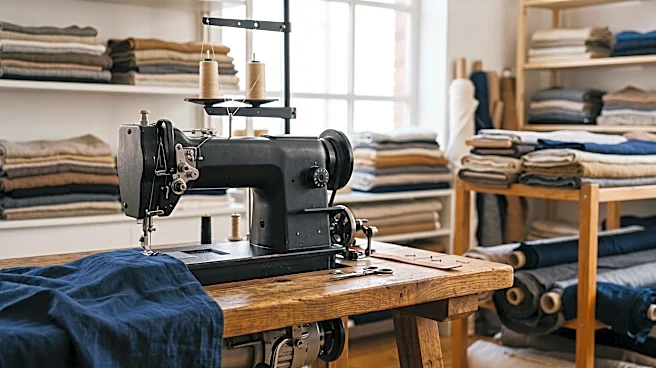
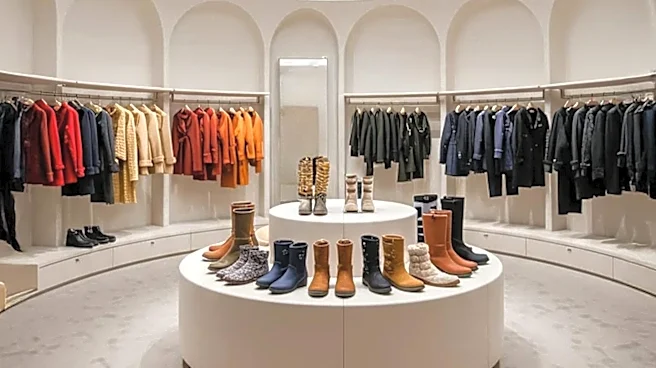
The company offers a wide array of products under various brands, including H&M HOME, which features interior products such as bed linens, towels, tableware, furniture, and lighting. Beyond new retail, H&M is actively involved in the circular economy through its operation of Sellpy, a digital platform for second-hand fashion and other products. Additionally, H&M supports Smartex.ai for real-time fault detection in textile production and Syre, a platform focused on scaling textile-to-textile recycling, particularly for polyester. The company also operates A Retro Tale, offering selected vintage and second-hand accessories, and Looper Textile for collecting and sorting used garments for reuse and recycling. These initiatives underscore H&M's commitment to diversifying its offerings and promoting sustainability within the fashion and home goods industries.
Why It's Important?
H&M's strategic expansion into homeware and the second-hand market reflects a significant shift in consumer preferences and retail trends. The growing demand for sustainable options and unique home decor items positions H&M to capture a larger market share beyond traditional apparel. By integrating platforms like Sellpy and A Retro Tale, H&M is directly addressing the increasing consumer interest in circular fashion and eco-conscious purchasing. This move could set a precedent for other large retailers to adopt similar models, fostering a more sustainable retail landscape. The investment in textile recycling technologies like Syre also highlights a proactive approach to environmental responsibility, potentially reducing waste and promoting resource efficiency across the industry. This diversification not only enhances H&M's brand image but also opens new revenue streams in competitive markets.
What's Next?
H&M is expected to continue expanding its H&M HOME product lines, potentially introducing more specialized collections and collaborations to cater to diverse consumer tastes. Further integration of its second-hand platforms, Sellpy and A Retro Tale, into its primary retail channels could be anticipated, making pre-owned items more accessible to a broader customer base. The company's investments in textile recycling technologies like Syre suggest a future where a larger percentage of its products could incorporate recycled materials, aligning with global sustainability goals. H&M may also explore partnerships with other brands or designers to enhance its vintage and second-hand offerings, further solidifying its position in the circular economy. Continued focus on digital platforms for both new and used goods will likely be a key component of its forward strategy, adapting to evolving e-commerce trends.
Beyond the Headlines
H&M's comprehensive approach to homeware and circular economy initiatives signals a broader transformation within the retail sector, moving beyond linear consumption models. This shift has profound implications for supply chain management, product design, and consumer engagement. The emphasis on second-hand and recycled materials challenges traditional notions of product lifecycle and ownership, promoting a more sustainable consumption culture. Ethically, H&M's investments in platforms like Smartex.ai for real-time fault detection could lead to improved labor conditions and quality control in textile manufacturing. Legally, increased focus on recycling and reuse may influence future regulations regarding waste management and material sourcing in the fashion and home goods industries. Culturally, the mainstreaming of second-hand shopping by a major retailer like H&M could normalize and popularize sustainable consumption practices among a wider demographic, fostering a greater appreciation for durability and resourcefulness.