






What's Happening?
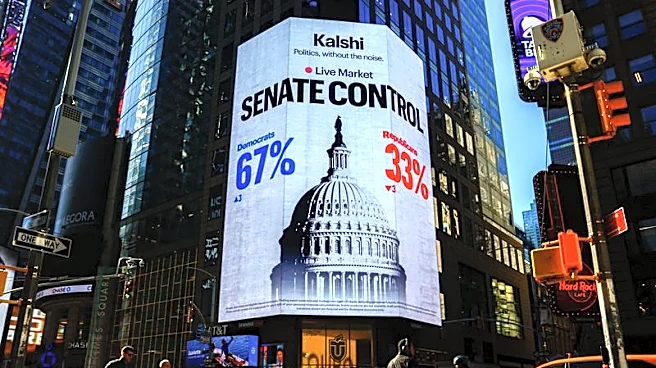
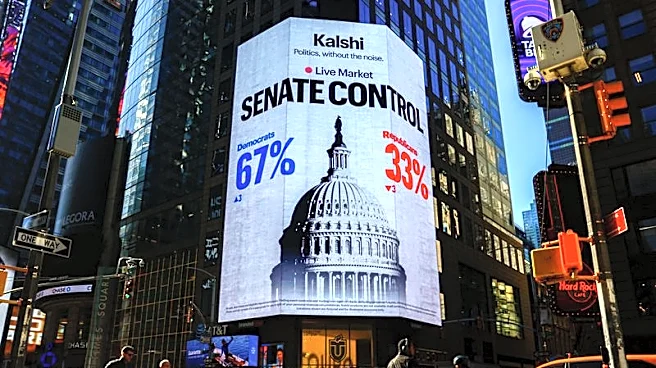
Prediction markets in the U.S. are actively trading contracts related to the potential for a U.S. debt default, with platforms like Polymarket and Kalshi offering various 'Yes' or 'No' outcomes for default by specific years, such as 2027. These markets allow
individuals to buy event contracts, with prices fluctuating based on trading activity and reflecting the implied probability of a default. For instance, a 'Yes' contract priced at $0.77 suggests a 77% market-perceived chance of the event occurring. Traders can hold contracts until resolution for a $1 payout if correct, or sell them earlier to realize profits or minimize losses. Polymarket provides recurring markets for U.S. debt default predictions, while Kalshi offers multiple individual markets covering different years, from 2027 to 2030. These platforms also feature markets for other economic indicators like recession probabilities and debt downgrades.
Why It's Important?
The emergence and high trading volume of U.S. debt default prediction markets highlight a growing public and financial interest in the nation's fiscal stability. These platforms provide a real-time, market-driven assessment of perceived risks, which can influence investor sentiment and economic planning. While not official forecasts, the implied probabilities from these markets can serve as an additional data point for policymakers, financial institutions, and businesses to gauge potential economic headwinds. The ability to trade on such outcomes also democratizes access to financial speculation, allowing a broader range of participants to express their views on future economic events. The regulatory oversight by the CFTC for some platforms, like Polymarket, adds a layer of legitimacy to these speculative markets, potentially increasing their influence on financial discourse.
What's Next?
As the U.S. debt continues to be a topic of national discussion, these prediction markets are likely to remain active, with contract prices and implied probabilities shifting in response to economic data, legislative actions, and political rhetoric. The recurring nature of some markets means that if a default does not occur by a specified date, new contracts for subsequent years will be offered, maintaining continuous engagement. Traders will need to stay informed on relevant news and economic developments to make informed decisions. The increasing popularity of these platforms could also lead to more sophisticated trading strategies and a greater integration of prediction market data into broader financial analysis, potentially influencing traditional financial instruments and investment decisions.
Beyond the Headlines
The rise of prediction markets for events like a U.S. debt default reflects a broader trend towards gamification and crowdsourcing of complex financial and political forecasts. While offering transparency into collective sentiment, these markets also raise questions about the potential for manipulation or the amplification of speculative bubbles. The reliance on 'implied probability' derived from trading prices, rather than expert consensus, introduces a different dynamic to risk assessment. Furthermore, the accessibility of these platforms to a wider audience could lead to increased public engagement with complex economic issues, but also carries the risk of misinterpretation or uninformed participation, especially given the high-risk nature of event contract trading.