



What's Happening?
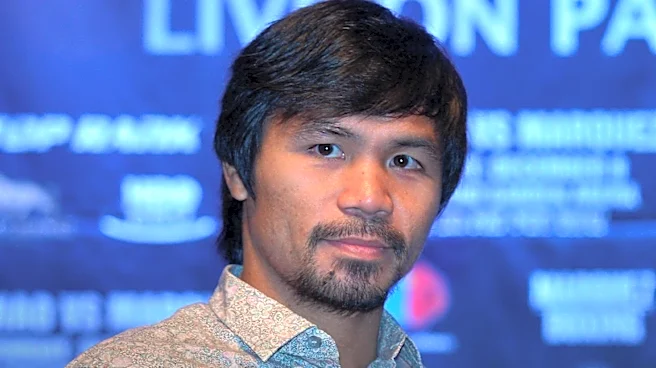
Veteran boxing trainer Robert Garcia has publicly stated his belief that Manny Pacquiao had a superior career compared to Floyd Mayweather Jr. Garcia shared his views on the True Hustle Podcast, emphasizing Pacquiao's willingness to engage challenging
opponents, his movement across various weight classes, and his ability to recover from defeats as key factors in his assessment. Garcia argued that an undefeated record, such as Mayweather's, should not be the sole determinant of a fighter's greatness. He highlighted Pacquiao's risk-taking approach, citing his 2008 victory over Oscar De La Hoya in the welterweight division as a defining moment. Garcia also noted Pacquiao's popularity among Mexican boxing fans, attributing it to his aggressive fighting style and commitment to delivering action-packed bouts, drawing parallels to former heavyweight champion Mike Tyson.
Why It's Important?
This commentary from a respected figure like Robert Garcia contributes to the ongoing debate among boxing enthusiasts and analysts regarding the legacies of two of the sport's most iconic figures. Garcia's perspective challenges the conventional wisdom that an undefeated record automatically signifies the greatest career, instead prioritizing factors like competitive spirit, willingness to take risks, and fan engagement. This viewpoint can influence how future generations of fighters and fans evaluate success in boxing, potentially shifting the focus from mere win-loss records to the quality of competition and the entertainment value provided. For the sport itself, such discussions keep the legacies of its stars alive and fuel interest, encouraging deeper analysis of what truly constitutes greatness in the ring. It also highlights the cultural impact of fighters like Pacquiao, particularly among specific fan bases.
What's Next?
While this is a retrospective analysis, discussions like Garcia's will likely continue to fuel debates in boxing media, podcasts, and fan forums. Other boxing personalities, trainers, and analysts may offer counter-arguments or support Garcia's stance, further enriching the discourse around Pacquiao and Mayweather's careers. This type of commentary often leads to renewed interest in past fights and documentaries, potentially introducing new fans to the historical significance of these athletes. For current and aspiring boxers, such evaluations can offer insights into different philosophies of career management and what aspects of their performance might resonate most with fans and critics. The debate over who had the 'better' career is unlikely to be definitively settled, but it will remain a recurring topic in boxing circles.
Beyond the Headlines
Garcia's argument delves into the philosophical aspects of sports greatness, suggesting that true legacy is built not just on victories but on the courage to face adversity and entertain. This perspective transcends boxing, resonating with broader discussions about achievement in any competitive field. It implies that the journey, the challenges overcome, and the impact on an audience can be as significant, if not more so, than an unblemished record. Culturally, Pacquiao's appeal to Mexican boxing fans, as noted by Garcia, underscores how fighting styles and perceived underdog narratives can create deep connections across different cultural groups. This highlights the universal language of sport and how certain athletes can transcend national boundaries through their performance and spirit, becoming symbols of resilience and determination for diverse audiences.