



What's Happening?
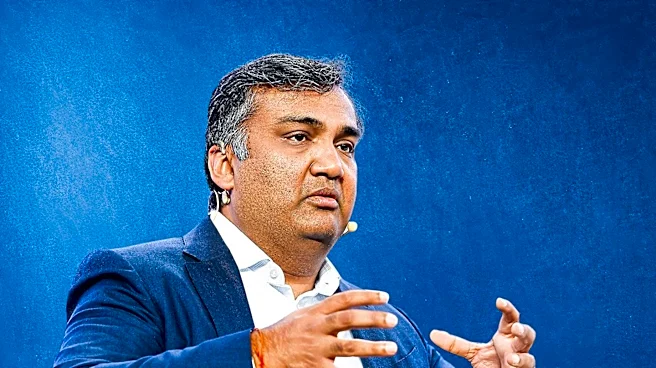
Clem Delangue, co-founder and CEO of Hugging Face, recently highlighted his company's experience in using artificial intelligence to defend against AI-driven attacks. During a New York Times DealBook Summit panel, Delangue stated that while many observe
AI attacks, fewer recognize the capability of AI to serve as a defense mechanism. This comment came amidst broader discussions on AI safety and regulation, where other panelists debated the necessity of pauses in AI development and the potential for regulatory oversight. Delangue's contribution emphasized a practical application of AI in cybersecurity, showcasing a proactive approach to managing risks associated with advanced AI systems. His remarks underscore the evolving landscape of AI security, where the technology itself is becoming a crucial tool for both offense and defense.
Why It's Important?
Delangue's statement is significant for the U.S. technology sector and cybersecurity landscape. It illustrates a growing trend where AI is not just a target for malicious actors but also a vital component in defensive strategies. For businesses and government entities, this highlights the dual nature of AI: while it presents new vulnerabilities, it also offers sophisticated solutions for protection. The ability to use AI to counter AI attacks could lead to more resilient digital infrastructures, reducing the impact of cyber threats that are becoming increasingly complex. This approach could also spur innovation in AI security, creating new markets and job opportunities in developing advanced defensive AI systems. Furthermore, it contributes to the ongoing debate about AI safety, suggesting that part of the solution lies within the technology itself, rather than solely in external regulation or development pauses.
What's Next?
The insights shared by Delangue suggest a future where AI-powered cybersecurity solutions will become increasingly prevalent. Companies like Hugging Face, which are at the forefront of AI development, are likely to continue investing in and refining AI-driven defense mechanisms. This could lead to the development of more sophisticated AI security products and services, potentially setting new industry standards for digital protection. Regulatory bodies and policymakers might also take note of these advancements, considering how AI's defensive capabilities can be integrated into national cybersecurity strategies. Additionally, the ongoing dialogue about AI safety will likely incorporate these practical applications, influencing how future AI development is approached and governed, with a focus on building robust and secure AI ecosystems.
Beyond the Headlines
The use of AI to defend against AI attacks raises profound implications for the future of digital warfare and cybersecurity ethics. It suggests an arms race scenario where advancements in offensive AI are met with equally sophisticated defensive AI, potentially leading to an escalating cycle of technological one-upmanship. This dynamic could challenge traditional notions of cybersecurity, shifting the focus from human-led defense to autonomous AI systems. Ethically, it prompts questions about the control and oversight of AI systems that are capable of independent decision-making in critical security contexts. Culturally, it may foster a greater reliance on AI for protection, potentially altering public perception of AI from a mere tool to an essential guardian of digital safety. This evolution could also influence legal frameworks, necessitating new regulations to govern the deployment and capabilities of defensive AI.