







What's Happening?
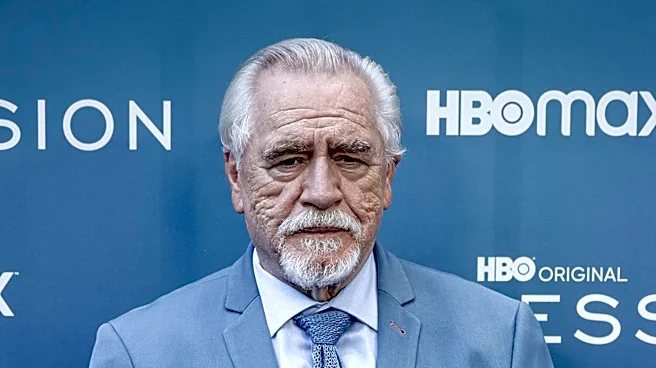
Veteran actor Brian Cox has revealed that his role as Don Framt, also known as the New York Ripper, in the series 'Dexter: Resurrection' was such a disturbing experience that he believes he needs therapy. Cox, known for playing villainous characters like
Logan Roy in 'Succession' and Hannibal Lecter in 'Manhunter,' described the role as the 'weirdest experience' of his acting career. He found the character of Framt, a serial killer who taunts victims' families after becoming wheelchair-bound, to be utterly loathsome. Cox struggled with the character's depravity, particularly the set design of Framt's apartment, which was covered with posters depicting body parts. He noted that the character emerged from him with surprising ease, despite his personal disdain for Framt, leading him to question the psychological impact of the role.
Why It's Important?
This situation highlights the profound psychological toll that intense acting roles can take on performers, even those with extensive experience like Brian Cox. It underscores the often-unseen challenges actors face when embodying deeply disturbing or morally reprehensible characters. For the entertainment industry, it raises questions about the support systems available to actors dealing with the emotional aftermath of such roles. It also offers a glimpse into the personal sacrifices made by actors to deliver compelling performances, potentially influencing how future productions approach character development and actor well-being. The public's perception of actors and their craft might also be affected, fostering a greater understanding of the mental and emotional demands of the profession beyond the glamour.
What's Next?
Cox has indicated that he still needs to schedule an appointment with a therapist to process the experience of playing Don Framt. The second season of 'Dexter: Resurrection' is set to continue, featuring Cox's character. His comments may spark further discussion within the acting community and among mental health professionals about the psychological support for actors. It could also lead to increased awareness among viewers regarding the emotional labor involved in portraying complex, dark characters. The ongoing performance of his character in the series will likely continue to draw attention to the themes of villainy and its impact on both the fictional world and the actor portraying it.
Beyond the Headlines
Cox's candid admission about needing therapy after a role delves into the ethical and psychological dimensions of method acting, even though he states he doesn't subscribe to it. The ease with which he embodied a character he 'absolutely loathed' suggests a deeper, perhaps unconscious, connection to darker human elements, which can be unsettling for an individual. This raises broader questions about the nature of empathy and identification in performance, and how actors navigate the boundary between their personal identity and the characters they portray. It also touches upon the cultural fascination with villainy and the responsibility of creators and performers in presenting such disturbing narratives, and the potential for these portrayals to affect the mental well-being of those involved.