




What's Happening?
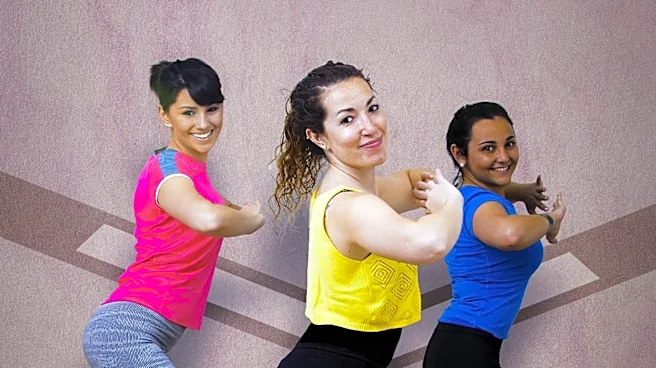
Dance workouts are emerging as a popular and effective method for fitness, offering a high-energy cardiovascular experience that combines music with continuous body movement. Programs like Zumba, Cardio Dance, and Jazzercise are highlighted for their
ability to burn significant calories, enhance coordination, and elevate mood. These rhythm-based workouts transform conventional exercise into an immersive, music-driven activity, where participants follow choreographed beats. This approach helps to lower the perceived physical effort by releasing dopamine, making fitness feel more like play than a chore. The variety of dance styles, from structured salsa classes to home video dance games, provides diverse options for individuals seeking an enjoyable way to stay active and improve their overall health.
Why It's Important?
The growing appeal of dance workouts signifies a shift in how individuals approach physical fitness, moving away from rigid, traditional exercise routines towards more engaging and enjoyable activities. This trend is important for public health as it addresses common barriers to consistent exercise, such as boredom and lack of motivation. By making fitness fun and accessible, dance workouts can lead to higher adherence rates, contributing to improved cardiovascular health, weight management, and mental well-being across a broader population. The integration of music and movement also offers psychological benefits, reducing stress and boosting mood, which are crucial for sustained healthy lifestyles. This approach can particularly benefit those who struggle with conventional gym environments or find them uninspiring, offering a viable and entertaining alternative.
What's Next?
The continued evolution of dance fitness is expected to see further integration of technology, such as virtual reality (VR) and augmented reality (AR) games, to create even more immersive and interactive workout experiences. As more people discover the benefits of combining movement with music, there will likely be an increase in specialized dance fitness classes catering to various age groups, skill levels, and musical preferences. The emphasis on enjoyment and play in fitness is also anticipated to influence other sectors of the wellness industry, encouraging the development of diverse and creative physical activities. This shift could lead to a broader re-evaluation of what constitutes effective exercise, prioritizing activities that foster long-term engagement and holistic well-being.
Beyond the Headlines
Beyond the immediate physical benefits, the rise of dance workouts taps into deeper psychological and cultural aspects of human well-being. The communal nature of many dance classes fosters social connection and a sense of belonging, combating feelings of isolation that can sometimes accompany individual exercise routines. Culturally, dance has always been a form of expression and celebration, and its re-emergence as a fitness tool reconnects individuals with these primal aspects of movement. This approach challenges the often-stark and performance-oriented narrative of modern fitness, promoting a more joyful and intuitive relationship with one's body. It highlights the ethical consideration of making fitness inclusive and enjoyable for everyone, regardless of their athletic background, by transforming exercise into an accessible and uplifting experience.