



What's Happening?
World Boxing has released its updated rankings for elite male and female boxers, reflecting performances from November 2024 to October 2026. This period included significant international competitions such as the European Championships in Sofia, the Aichi-Nagoya
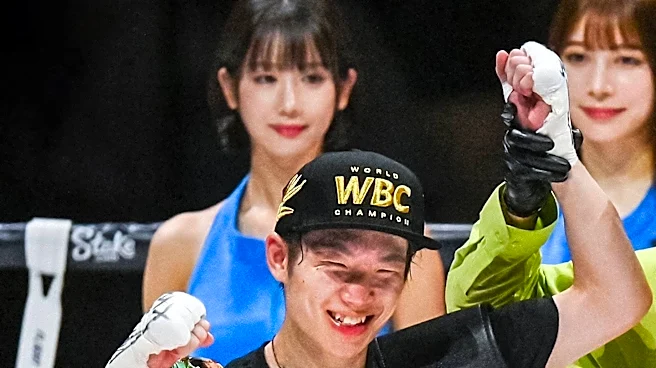
2026 Asian Games, and the PanAmerican Boxing Championships in Puebla. As a result of these events, two new world number ones have been crowned: Japan’s Rui Yamaguchi and Azerbaijan’s Saidjamshid Jafarov, each leading their respective categories. The updated rankings also feature 39 new entries within the top ten across various weight categories, and a total of 225 boxers have been added to the rankings since the previous publication. This comprehensive update provides a current snapshot of the global boxing landscape, highlighting emerging talent and shifts in competitive dominance.
Why It's Important?
The updated World Boxing rankings are crucial for the sport as they influence athlete recognition, potential match-ups, and qualification pathways for major international tournaments. For U.S. boxers, these rankings provide a benchmark against global competitors, indicating areas of strength and where improvements are needed to climb the international ladder. The emergence of new world number ones, like Yamaguchi and Jafarov, signals a dynamic and evolving competitive environment, potentially inspiring younger athletes and shifting national boxing strategies. For U.S. boxing federations and coaches, understanding these global shifts is vital for talent development, resource allocation, and strategic planning to ensure U.S. athletes remain competitive on the world stage. The significant number of new entries also suggests a broadening talent pool, increasing the competitive intensity and making it more challenging for athletes to maintain top positions.
What's Next?
The newly published rankings will serve as a critical reference point for upcoming international boxing events and national team selections. Athletes and their teams will analyze these rankings to identify potential opponents, assess their standing, and strategize for future competitions. National boxing federations, including those in the U.S., will likely use these rankings to guide their training programs and identify promising athletes for investment and support. The performance of these newly crowned world number ones, Rui Yamaguchi and Saidjamshid Jafarov, will be closely watched to see if they can maintain their top positions in subsequent competitions. Future tournaments will provide opportunities for other boxers to challenge these rankings, leading to continuous shifts in the global boxing hierarchy.
Beyond the Headlines
Beyond the immediate competitive implications, these updated rankings reflect broader trends in global sports development. The rise of athletes from diverse nations, such as Japan and Azerbaijan, highlights the increasing internationalization of boxing and the spread of high-level training and talent development programs worldwide. This global diversification can lead to more varied fighting styles and tactical approaches, enriching the sport for both participants and spectators. For the U.S., this means facing a wider array of competitive challenges and potentially learning from different national boxing philosophies. The continuous influx of new talent, as evidenced by the 225 added boxers, underscores the enduring appeal and accessibility of boxing as a sport, fostering a vibrant and ever-changing competitive landscape.