





What's Happening?
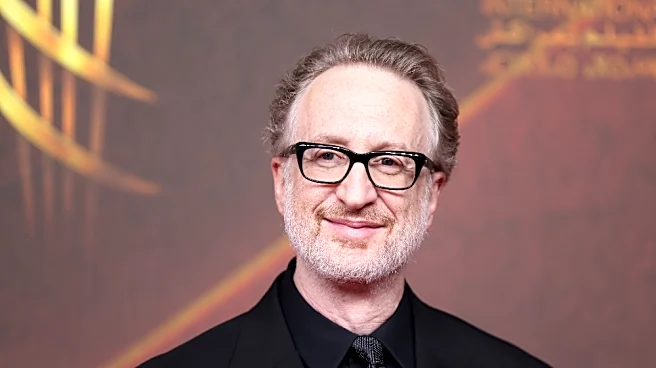
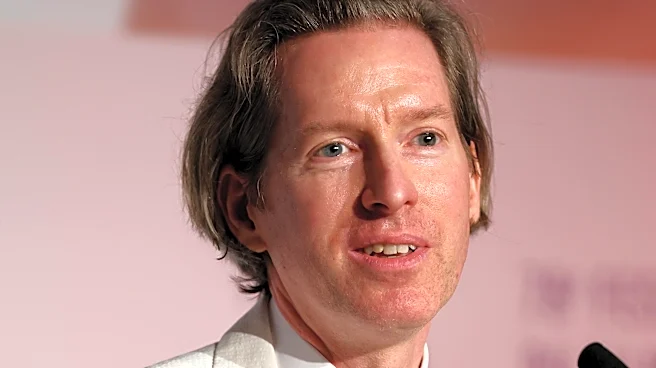
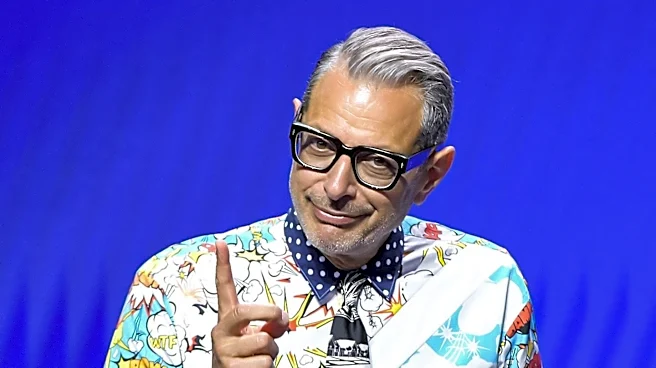
Actor Jeff Goldblum, at the Marrakech International Film Festival, discussed his experiences working with director Wes Anderson, highlighting Anderson's meticulous approach to filmmaking. Goldblum recounted an instance during the filming of 'The Grand
Budapest Hotel' where Anderson insisted on precise adherence to the script, even correcting a minor word change from 'to' to 'and' in a long speech. Goldblum explained his reasoning for the change, but Anderson requested he revert to the original script. Goldblum also shared his broader philosophy on creativity, emphasizing the necessity of making 'flops' and 'bad ideas' as essential 'fertilizer' for surprising successes. He cited Harold Clurman's perspective that the focus should be on why a show succeeds rather than why it fails, advocating for continuous creative output regardless of immediate outcome.
Why It's Important?
Goldblum's insights offer a valuable look into the creative processes of highly regarded filmmakers and actors. His anecdote about Wes Anderson underscores the directorial vision and control that defines Anderson's distinctive style, which is crucial for understanding the consistent aesthetic and narrative coherence across his filmography. This meticulousness is often a hallmark of auteur directors, influencing how actors approach their roles and how stories are ultimately presented. Furthermore, Goldblum's philosophy on embracing failure as a necessary component of creativity is significant for artists and innovators across all fields. It challenges the conventional fear of failure, reframing it as an integral part of the learning and development process, which can encourage greater risk-taking and experimentation in creative endeavors.
What's Next?
While Goldblum's comments are retrospective regarding his work with Wes Anderson, they provide ongoing context for how audiences and critics might interpret Anderson's future projects. Understanding Anderson's precise directorial style helps explain the unique visual and narrative consistency in his films. For Goldblum, his continued career in acting and music will likely reflect his philosophy of continuous creative engagement and embracing diverse projects, including his upcoming voice role in Benny Safdie's 'Lizard Music.' His emphasis on daily practice, particularly with piano, suggests a sustained commitment to honing his craft, which will continue to inform his performances and artistic output. The broader implication is a continued appreciation for directors who maintain strong artistic control and for artists who view their work as an ongoing process of growth and experimentation.
Beyond the Headlines
Goldblum's discussion delves into the deeper psychological and philosophical aspects of artistic creation. His anecdote about Anderson highlights the tension between an actor's interpretive freedom and a director's singular vision, a common dynamic in collaborative arts. It raises questions about the balance between improvisation and strict adherence to a script, and how different approaches can lead to distinct artistic outcomes. His broader point about the necessity of 'flops' touches upon the often-unseen struggles and iterative processes behind successful creative works. This perspective can be particularly inspiring in a culture that often celebrates only success, reminding us that failure is not an endpoint but a crucial step in the journey of innovation and artistic development. It also subtly critiques a results-oriented mindset, advocating for the value of the creative process itself.