





What's Happening?
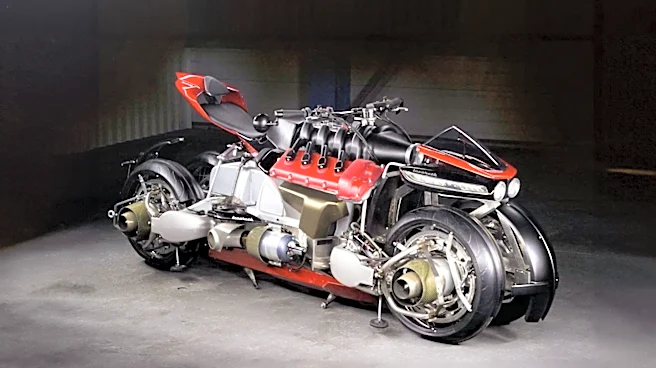
Neiman Marcus, a high-end American department store, offered a limited edition Dodge Tomahawk for sale through its Christmas catalog at a price of $555,000. Nine units of this unique vehicle, described by Dodge as 'automotive sculptures' rather than production
models, were sold. The Tomahawk is a concept vehicle built around the 8.3-liter V10 engine from the Dodge Viper, boasting 500 horsepower. Its distinctive design features four closely grouped wheels and a retro-Art Deco aesthetic. Despite initial claims of potential top speeds reaching up to 680 km/h (approximately 420 mph), Dodge later admitted that during its own tests, the Tomahawk never exceeded 160 km/h (about 100 mph). The vehicle was not street-legal and was intended for exhibition, a classification chosen partly for legal liability reasons.
Why It's Important?
The sale of the Dodge Tomahawk by Neiman Marcus highlights a unique intersection of luxury retail, automotive design, and marketing strategy in the U.S. market. For Neiman Marcus, offering such an exclusive and unconventional item reinforced its image as a purveyor of extraordinary and high-value goods, catering to an affluent clientele seeking unique collectibles. For Dodge, the Tomahawk served as a significant marketing tool, showcasing creative daring and engineering prowess without the intention of mass production. This approach allowed Dodge to generate considerable buzz and demonstrate its technical capabilities, even if the vehicle's performance claims were later tempered. The classification as an 'automotive sculpture' also underscores the legal and regulatory challenges associated with introducing radical vehicle designs, influencing how manufacturers position and market such creations to avoid liability.
What's Next?
While the Dodge Tomahawk was a limited-run offering, its legacy continues to influence how luxury brands and automotive manufacturers approach concept vehicles and exclusive collaborations. Future endeavors in this space may see similar partnerships between high-end retailers and innovative designers, focusing on unique, non-street-legal 'art pieces' that serve as marketing statements rather than functional transportation. The precedent set by the Tomahawk's sale through a luxury catalog could encourage other brands to explore unconventional distribution channels for highly specialized or collectible items. Additionally, the ongoing fascination with the Tomahawk's design and its unfulfilled speed claims may inspire future concept vehicles that push the boundaries of engineering and aesthetics, even if their practical applications remain limited.
Beyond the Headlines
The Dodge Tomahawk's story delves into the deeper implications of branding, perception, and the blurred lines between art and engineering. By marketing the vehicle as an 'automotive sculpture,' Dodge and Neiman Marcus tapped into the desire for exclusivity and the allure of the extraordinary, transforming a mechanical marvel into a high-value collectible. This strategy allowed them to bypass the stringent regulatory hurdles associated with street-legal vehicles, effectively creating a new category of luxury item. The discrepancy between the advertised top speeds and the actual tested performance also raises questions about marketing ethics and the power of hyperbole in generating public interest. Ultimately, the Tomahawk represents a fascinating case study in how a product can transcend its functional purpose to become a symbol of innovation, luxury, and a bold statement of brand identity, even if its practical utility is minimal.