






What's Happening?
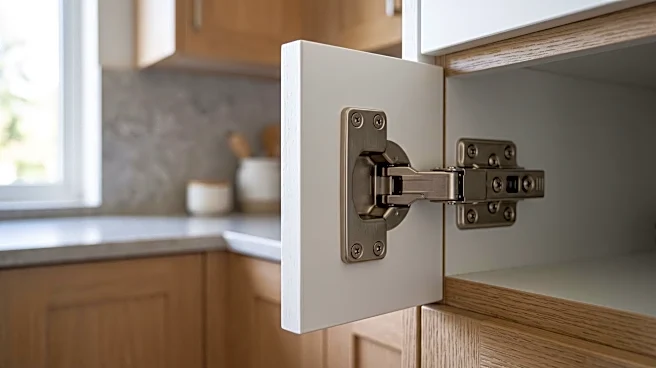
The selection of cabinet hinges, specifically between 110-degree and 170-degree opening angles, significantly impacts kitchen functionality and design. For standard kitchen cabinets housing shelves or open boxes, 110-degree hinges are generally recommended.
These hinges allow the door to open slightly past square, providing ample access without excessive swing. In contrast, 170-degree hinges are crucial for cabinets that conceal pull-outs, inner drawers, or corner units. The wider opening angle ensures the door moves completely clear of the cabinet opening, preventing obstruction of sliding components. The distinction between opening angle and 'zero protrusion' is also vital; while a 170-degree hinge offers a wide swing, zero protrusion ensures the door is entirely out of the opening, a critical feature for internal drawers. The physical size and cost of wide-angle hinges are also factors, as they are bulkier and generally more expensive than their standard counterparts.
Why It's Important?
The choice of cabinet hinges has practical implications for U.S. homeowners and the kitchen design and manufacturing industries. Incorrect hinge selection can lead to frustrating daily use, such as cabinet doors blocking access to pull-out shelves or striking adjacent walls and appliances. For manufacturers and designers, understanding these nuances is essential for creating functional and user-friendly kitchen spaces. Opting for 110-degree hinges where appropriate can reduce material costs and internal cabinet space occupied by the hinge mechanism. Conversely, failing to use wide-angle or zero-protrusion hinges for specific applications can result in customer dissatisfaction and potential warranty claims. This decision impacts the overall efficiency and ergonomic design of kitchen layouts, influencing consumer preferences and market demand for specific cabinet hardware solutions.
What's Next?
Consumers planning kitchen renovations or new builds should carefully assess the contents and adjacent elements of each cabinet before selecting hinges. This involves considering whether a cabinet will house standard shelves, pull-outs, or internal drawers, and if it's located next to a wall, appliance, or another cabinet door. Manufacturers may continue to innovate hinge designs to offer more compact wide-angle options or integrated zero-protrusion features. The industry could also see an increased emphasis on educational resources for both professionals and consumers to ensure optimal hinge selection, potentially leading to more specialized hinge products tailored to specific kitchen configurations and user needs. The ongoing evolution of kitchen storage solutions, such as more sophisticated pull-out systems, will likely drive further advancements in hinge technology.
Beyond the Headlines
Beyond the immediate functionality, hinge selection reflects a broader trend in home design towards optimizing space and user experience. The detailed consideration of hinge angles and protrusion highlights the micro-level engineering that contributes to the overall quality and perceived value of a kitchen. This attention to detail can influence brand reputation for cabinet makers and hardware suppliers. Ethically, providing clear and accurate information about hinge capabilities and limitations empowers consumers to make informed decisions, preventing potential frustration and unnecessary replacements. Culturally, the emphasis on efficient and accessible kitchen spaces aligns with modern lifestyle demands for convenience and organization, underscoring how even small components like hinges play a role in shaping daily domestic life.