




What's Happening?
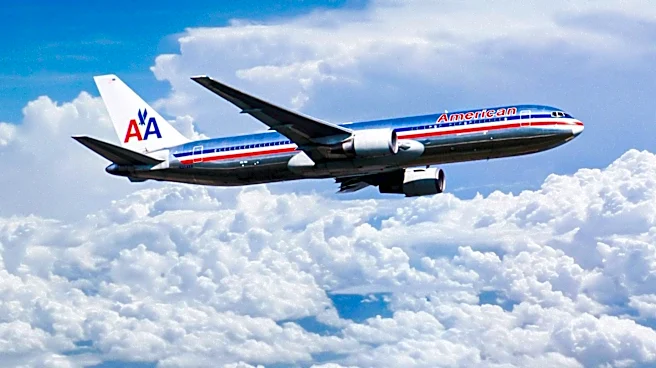
American Airlines has successfully operated a commercial passenger flight using electro sustainable aviation fuel (eSAF) produced by Infinium. This flight, which took off from Corpus Christi International Airport and landed at Dallas Fort Worth International Airport,
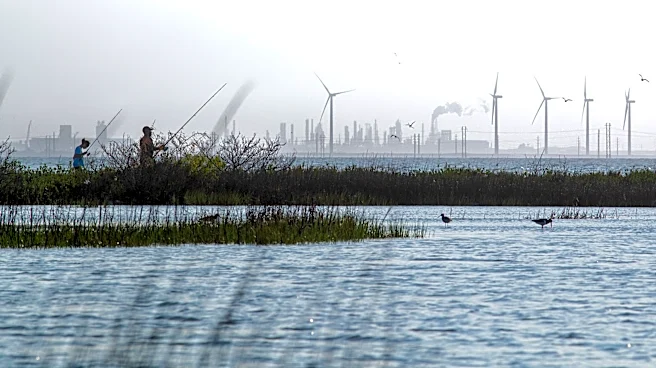
marks a significant milestone in the aviation industry's efforts to reduce carbon emissions. The eSAF was produced at Infinium's Pathfinder facility in Corpus Christi, Texas, the world's first commercial-scale power-to-liquids eFuels production site. The fuel was blended with conventional jet fuel and met the ASTM specification for Jet A, allowing it to be used in existing aircraft engines without modification. This development is part of a broader initiative by American Airlines to adopt sustainable aviation solutions, supported by partnerships with Infinium and financial backing from entities like Breakthrough Energy Catalyst and Brookfield Asset Management.
Why It's Important?
The use of eSAF represents a critical step towards decarbonizing the aviation industry, which currently consumes nearly 100 billion gallons of jet fuel annually. Sustainable aviation fuels like eSAF can reduce lifecycle greenhouse gas emissions by over 90% compared to conventional jet fuels. This transition not only addresses environmental concerns but also enhances energy security by diversifying fuel sources. American Airlines' commitment to sustainable fuels is part of a larger trend in the industry to meet environmental targets and reduce reliance on fossil fuels. The successful deployment of eSAF could pave the way for broader adoption across the industry, potentially leading to significant reductions in aviation-related emissions.
What's Next?
American Airlines plans to continue its collaboration with Infinium to scale up the production and use of eSAF. Infinium's Project Roadrunner, expected to begin production in 2027, aims to produce over 5 million gallons of eSAF annually. This project is supported by financial agreements with Citi to reduce scope 3 emissions from employee travel. As the industry moves towards sustainable solutions, other airlines may follow suit, increasing demand for eSAF and similar technologies. The success of this initiative could influence regulatory policies and encourage further investment in sustainable aviation technologies.