




What's Happening?
Rimrock Banff has launched as the first North American property under Accor's Emblems Collection, following an extensive transformation. The 320-room resort, located in Banff National Park, now features 57 suites with interiors designed to highlight mountain
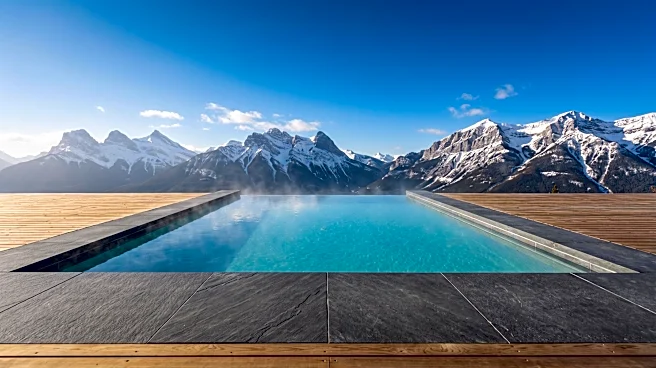
views. A significant addition is the 9,600-square-foot Bathhouse, offering luxury hydrothermal wellness experiences including indoor and outdoor thermal environments, vitality pools, a mountain-facing infinity pool, salt sauna, aromatic steam room, and glacial cold plunges. Wellness Studio suites are equipped with movement and recovery amenities, wellness minibars, and sleep-focused features. The resort's Expeditions Centre provides over 50 seasonal activities, such as guided hikes, forest bathing, and Indigenous cultural encounters, emphasizing integration with the national park. Dining options have also been revamped with four new venues, including Parker’s Table for seasonal Canadian cooking and The Listening Room for rare spirits and wine. The property adopts Alpine Honey as its signature local ingredient, incorporated into arrival rituals, wellness tonics, and culinary offerings.
Why It's Important?
The introduction of Rimrock Banff as the Emblems Collection's first North American property signifies a strategic expansion for Accor in the luxury hospitality market, focusing on established properties with distinct identities rather than uniform hotel templates. This move reflects a growing trend in the U.S. and global tourism industry towards experiential and wellness-focused travel. By integrating sleep-focused features, hydrothermal wellness, and nature-based activities, the resort caters to an increasing demand for holistic well-being and immersive experiences. This approach could influence other luxury hotel brands to enhance their wellness offerings and integrate local environments more deeply into their guest experiences. The emphasis on local sourcing, such as Alpine Honey, also highlights a broader shift towards sustainable and authentic travel, potentially setting new standards for luxury resorts in national park settings and impacting regional economies through partnerships with local producers and cultural programs.
What's Next?
Accor's success with Rimrock Banff will likely inform its future expansion strategy for the Emblems Collection across North America and other markets, potentially leading to more acquisitions and transformations of unique, established properties. The resort will continue to refine its wellness and experiential offerings, possibly introducing new activities or partnerships based on guest feedback and emerging trends in luxury travel. Other hospitality brands will be closely observing Rimrock Banff's performance, particularly its ability to attract and retain guests seeking high-end wellness and nature-integrated experiences. This could spur increased investment in similar concepts within the U.S. and Canadian luxury hotel sectors, driving innovation in sustainable tourism and personalized guest services. The resort's focus on local engagement and unique amenities may also encourage other properties to differentiate themselves through authentic regional experiences.
Beyond the Headlines
The transformation of Rimrock Banff into an Emblems Collection property underscores a deeper shift in consumer values, where luxury is increasingly defined by authenticity, personalized well-being, and connection to nature, rather than just opulence. The integration of 'sleep-focused features' and comprehensive wellness programs reflects a societal recognition of sleep as a critical component of health, extending beyond medical necessity into leisure and travel. This trend could lead to a broader re-evaluation of hotel design and service, with a greater emphasis on creating environments that actively promote rest and recovery. Furthermore, the resort's deep integration with Banff National Park highlights a growing ethical and cultural dimension in tourism, where properties are expected to not only offer access to natural beauty but also to contribute to its preservation and offer meaningful cultural engagement, such as Indigenous cultural encounters. This could foster a more responsible and enriching form of tourism that benefits both travelers and local communities.