
What's Happening?
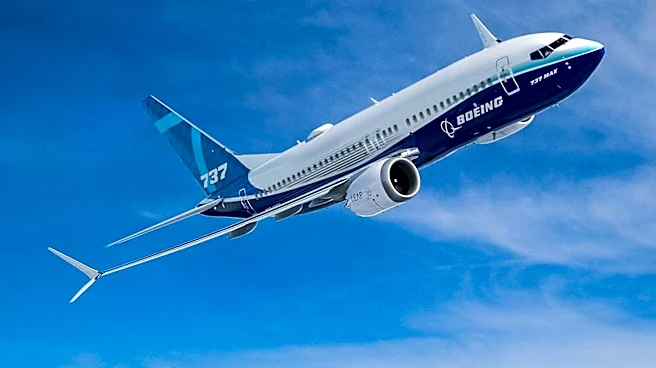
Avolon, the world's third-largest aircraft lessor, has placed a significant order for 140 Boeing 737 MAX jets. This order is part of a larger deal that also includes 110 aircraft from Airbus, with an option
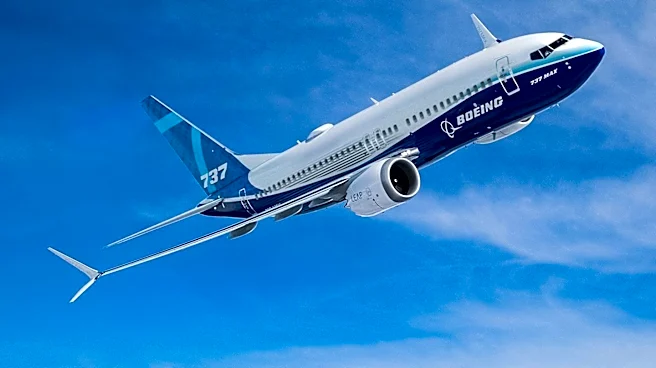
for an additional 100. This marks Avolon's largest order with either manufacturer, increasing its total aircraft on order to 749, up from its current owned fleet of 561 planes. The Boeing order specifically focuses on the 737 MAX, a key aircraft for the U.S. manufacturer. The deal is currently awaiting approval from Avolon's majority shareholder, Bohai Leasing, which is expected before the end of the month. This move by Avolon underscores a strong demand for new-technology aircraft in the aviation sector, as noted by CEO Andy Cronin. Boeing itself delivered 171 airplanes in Q2, its best quarter since 2018, and is increasing its 737 output to 47 jets per month, with plans to reach 52.
Why It's Important?
This substantial order from Avolon is a significant positive for Boeing, bolstering its already record-high backlog, which stood at $715 billion in July, including over 6,200 airplanes. The focus on the 737 MAX is particularly crucial for Boeing, as it is a cornerstone of their commercial aircraft strategy. For the broader U.S. aviation industry, such large orders signal continued confidence in air travel demand and the need for fleet modernization. Aircraft lessors like Avolon play a vital role, owning approximately half of the world's airline fleet and providing airlines with flexibility amid long order backlogs from manufacturers. This demand supports lessor rentals, resale values, and profits, indirectly benefiting U.S. airlines by ensuring access to modern aircraft. The order also highlights the ongoing competition between Boeing and Airbus, with lessors strategically diversifying their portfolios to mitigate delivery risks and capitalize on market demand for fuel-efficient aircraft.
What's Next?
The immediate next step for this order is the approval from Avolon's majority shareholder, Bohai Leasing, which is anticipated by the end of the month. Following approval, Boeing will integrate these 140 737 MAX jets into its production schedule. Investors will closely monitor Boeing's ability to ramp up its 737 production, with current plans to reach 47 jets a month and then 52. Supply chain readiness, particularly for engines, will be critical to meeting these increased production targets. Boeing CEO Kelly Ortberg has indicated that supply chain limits are not foreseen at a rate of 52, but challenges may arise beyond that. The company is also in early labor talks with its engineers' union, whose contract ends in October, which could influence future production stability. The successful execution of this order and continued production increases will be key factors for Boeing's stock performance and its ability to meet global demand for new aircraft.
Beyond the Headlines
This order reflects a broader trend in the aviation industry where lessors are strategically positioning themselves to meet future airline demands, especially for new-technology aircraft that offer improved fuel efficiency and reduced emissions. By placing large orders with both Boeing and Airbus, Avolon is hedging against potential production delays or issues from a single manufacturer, ensuring a steady supply of aircraft for its diverse client base. This strategy also underscores the increasing influence of lessors in shaping the global airline fleet, as they often act as intermediaries between manufacturers and airlines, facilitating fleet modernization and expansion. The continued strong demand for aircraft like the 737 MAX also points to the industry's recovery and long-term growth projections, despite ongoing challenges such as supply chain constraints and labor negotiations. The ethical implications of aircraft manufacturing, including safety standards and environmental impact, remain under scrutiny as production rates increase to meet these substantial orders.