








What's Happening?
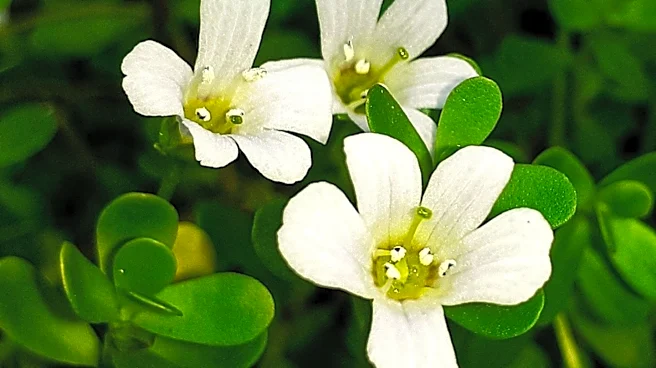
The Brahmi plant, primarily referring to Bacopa monnieri, is a creeping wetland herb widely recognized in Ayurveda for its association with intellect, memory, and mental clarity. While traditional Ayurvedic texts categorize it under 'Medhya Rasayana'
(intellect and rejuvenation), modern research has investigated Bacopa extracts for potential benefits in memory, learning, attention, and stress response. However, current scientific evidence, while promising in selected areas, does not conclusively prove Brahmi as a cure for conditions like dementia, anxiety disorders, epilepsy, or ADHD. It is crucial to distinguish Bacopa monnieri from Centella asiatica (Gotu Kola), which is also sometimes referred to as Brahmi in certain Indian regions, by verifying the botanical name. The plant's active compounds, known as bacosides, are central to much of the pharmacological research, and commercial extracts are often standardized based on their bacoside content.
Why It's Important?
The ongoing research into Bacopa monnieri's cognitive benefits holds significant implications for the U.S. health and wellness industry, particularly in the growing market for nootropics and brain health supplements. As the population ages and concerns about cognitive decline increase, natural remedies with scientific backing become highly sought after. However, the distinction between traditional use, preclinical findings, and human clinical evidence is critical to prevent misleading claims and ensure consumer safety. The emphasis on verifying botanical names and understanding the limitations of current research highlights the need for informed decision-making in a market often saturated with unsubstantiated health claims. This also underscores the importance of regulatory oversight for herbal supplements to ensure product quality, accurate labeling, and consumer protection against potentially harmful or ineffective products.
What's Next?
Further high-quality clinical research is needed to firmly establish the memory-enhancing and neuroprotective effects of Bacopa monnieri. This will involve larger, more standardized studies to clarify its efficacy across various cognitive abilities and populations. Consumers and healthcare professionals will likely continue to navigate a landscape where traditional wisdom meets modern science, requiring careful evaluation of product claims. The demand for transparent labeling, including botanical names and standardization methods, is expected to increase. Educational efforts will be crucial to inform the public about the nuances of herbal medicine, distinguishing between traditional beliefs, preliminary findings, and clinically proven benefits. This ongoing dialogue will shape how Ayurvedic herbs like Brahmi are perceived, regulated, and integrated into mainstream health practices in the U.S.
Beyond the Headlines
The discussion surrounding the Brahmi plant extends beyond its immediate health benefits to touch upon broader issues of cultural appropriation, scientific validation of traditional medicine, and consumer trust. The challenge of reconciling ancient Ayurvedic wisdom with modern scientific methodology highlights the complexities of cross-cultural medical understanding. It also brings to light the ethical considerations in marketing natural products, where traditional associations can be leveraged without sufficient scientific evidence. This situation prompts a deeper reflection on how societies value different forms of knowledge and the criteria used to determine efficacy and safety. The need for precise botanical identification also underscores the importance of biodiversity and the potential for confusion and harm when common names are used ambiguously. Ultimately, the Brahmi plant serves as a case study for the ongoing integration and critical evaluation of traditional healing practices within a globalized, science-driven health paradigm.