







What's Happening?
Ethiopia's annual inflation rate decreased to 14.6% in October 2026, marking its lowest point in four months. This decline is primarily attributed to a slowdown in the rate of food price increases, pulling the headline figure down for the third consecutive
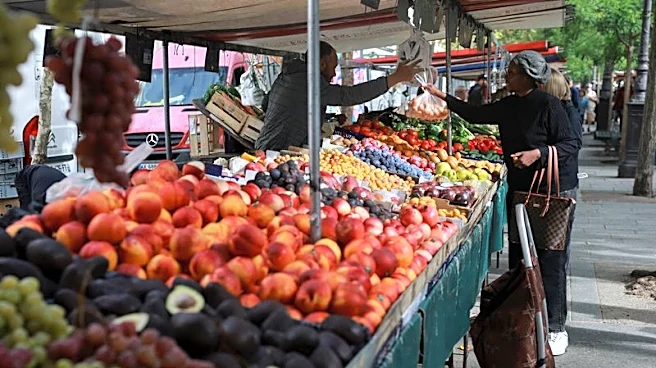
month. Data from the Ethiopian Statistical Service (ESS) shows headline inflation falling from 14.9% in September, 15.1% in August, and 15.3% in July. Despite this easing, the October rate remains significantly higher than the 9.4% recorded in March, which was the year's lowest. A notable divergence is occurring between food and non-food price pressures; food and non-alcoholic beverage inflation eased to 14.1% in October from 14.8% in September, while non-food inflation rose to 15.4% from 15.1%, marking the third consecutive month where non-food prices increased faster than food prices.
Why It's Important?
The easing of Ethiopia's headline inflation rate offers some relief, but the underlying trends indicate persistent economic challenges. The continued rise in non-food inflation, surpassing food inflation for three consecutive months, suggests that broader economic pressures are still at play. Categories like transport (up 17.1%), education (up 15.5%), and other goods and services (up 19.1%) are experiencing significant price hikes, impacting household budgets beyond just food. While the overall inflation rate is slowing, consumer prices are still increasing, albeit at a slower annual pace. This situation poses a challenge for the National Bank of Ethiopia (NBE), which recently held its benchmark policy interest rate at 16%, indicating a cautious monetary stance due to ongoing price pressures. The uneven relief within food categories, with sugar, honey, and chocolate products seeing a 36.2% annual increase, further highlights the complex nature of inflation's impact on different consumer goods.
What's Next?
The National Bank of Ethiopia (NBE) is maintaining a cautious monetary policy, holding its benchmark interest rate at 16% due to continued price pressures, despite the easing of headline inflation. The central bank has identified supply-side factors, such as higher energy costs and disruptions from the Middle East conflict, as key contributors to domestic inflation, particularly for non-food items like electricity, kerosene, and firewood. To manage excess liquidity, the NBE plans to continue open-market operations and implement additional reserve requirements for banks whose credit expansion poses risks to price stability. These measures indicate that the NBE anticipates ongoing inflationary pressures and is prepared to intervene to stabilize prices. Future inflation reports will be crucial in determining whether these monetary policies are effectively curbing price increases across all sectors of the Ethiopian economy.
Beyond the Headlines
The divergence between food and non-food inflation in Ethiopia points to a complex interplay of domestic and international factors. While a slowdown in food price increases might offer some immediate relief, the persistent rise in non-food costs, driven by energy and other services, suggests a deeper structural inflation problem. This could indicate that global supply chain issues and geopolitical events, such as the conflict in the Middle East, are having a significant and sustained impact on Ethiopia's economy. The central bank's focus on managing liquidity and credit expansion also highlights concerns about the broader money supply and its potential to fuel inflation. This situation could lead to a prolonged period of elevated prices for essential services and goods, potentially affecting economic growth and the purchasing power of ordinary citizens, even as food price growth moderates.