




What's Happening?
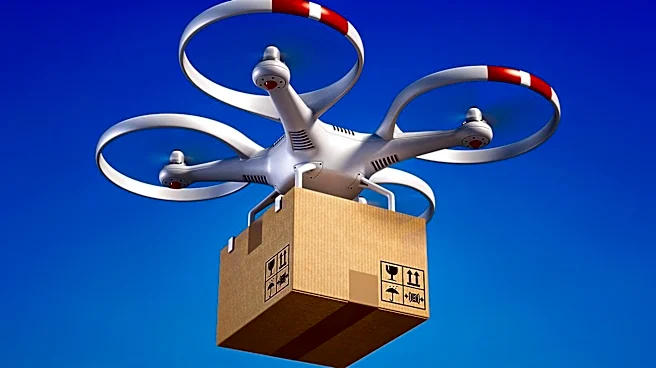
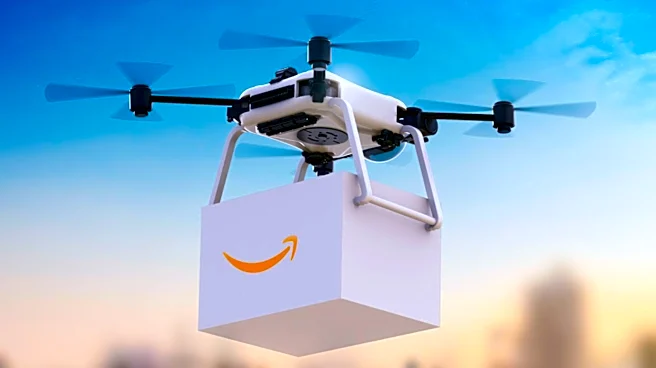
An Amazon Prime Air MK30 delivery drone crashed onto a garage roof in Huntington Woods, Michigan, on Friday, November 20, after reportedly striking an overhead line. The incident occurred after the drone delivered a shampoo order to customer Jim Brennan's
backyard. Brennan stated that as the drone ascended, it hit a fiber-optic line, lost a propeller, and then landed on his neighbor Logan Coomes' garage. No injuries were reported. Amazon spokesperson Jack Stelzner confirmed that a Prime Air drone 'landed on a resident’s shed during a delivery' and stated that such incidents are 'extremely rare.' Amazon's team arrived within minutes to retrieve the drone, and the company has offered to cover the damage to the garage. This incident follows a similar event in Waco, Texas, in November 2025, where an MK30 drone cut an internet cable.
Why It's Important?
This drone crash in Michigan highlights the ongoing challenges and safety concerns associated with expanding drone delivery services. While Amazon maintains that such incidents are rare, the occurrence of a drone striking an overhead line raises questions about the 'detect and avoid' technology in the MK30 drones, especially concerning thin cables which are difficult for aircraft to detect. The incident could prompt increased scrutiny from regulatory bodies like the Federal Aviation Administration (FAA), which was reportedly investigating the Waco incident. For residents in areas where drone delivery operates, such events can erode public trust and raise concerns about property damage and safety. The incident also underscores the operational differences between Amazon's drones, which descend to 13 feet for package release, and competitors like Zipline, which maintain higher altitudes and use tethers for delivery, potentially reducing the risk of striking ground-level obstacles.
What's Next?
Amazon will likely conduct an internal investigation into the Huntington Woods crash, as it states it investigates any delivery that does not go as planned. The FAA may also initiate an investigation, similar to its response to the Waco incident, to assess the safety protocols and technology of Amazon's drones. This event could influence future regulatory guidelines for drone operations, particularly regarding obstacle avoidance systems and flight paths in residential areas with overhead utility lines. For Amazon, addressing these safety concerns transparently will be crucial for maintaining public confidence as it continues to expand its Prime Air service across the U.S. The company may need to re-evaluate its drone technology or operational procedures to prevent similar incidents, especially as it aims for widespread adoption of drone delivery.
Beyond the Headlines
The Michigan drone crash brings to the forefront the complex interplay between technological innovation, public safety, and regulatory oversight in the burgeoning field of autonomous delivery. While drone delivery offers significant convenience and efficiency, incidents like this underscore the need for robust safety mechanisms and clear operational boundaries. The challenge of detecting thin wires, as highlighted by this event, points to a specific technical hurdle that drone manufacturers and operators must overcome. Furthermore, the public's reaction to such incidents will play a critical role in shaping the future of drone delivery. Balancing the promise of rapid, eco-friendly delivery with the imperative of ensuring safety and minimizing disruption to communities will be a continuous process requiring collaboration between technology companies, regulators, and local governments.