







What's Happening?
China is actively pursuing the Arctic's Northern Sea Route (NSR) as a viable alternative for trade between China and Europe, driven by vulnerabilities exposed in traditional routes like the Suez Canal and the Strait of Hormuz due to Middle East tensions.
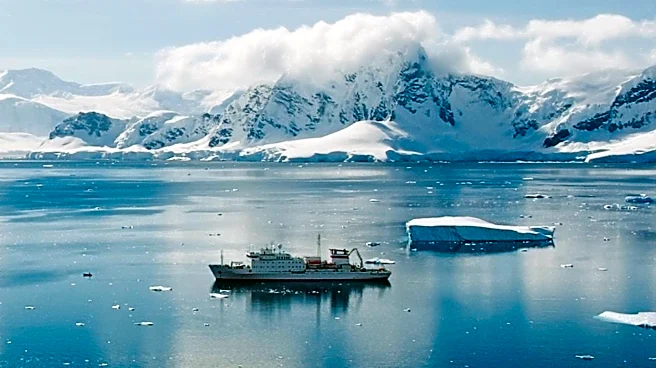
Chinese shipping company Sea Legend has launched a regular container service through the NSR, which cuts through the Arctic Circle along Russia’s northern coast. This route, navigable during warmer months, can significantly reduce transit times, potentially halving the journey from China to Europe compared to the Suez Canal. The route is particularly suited for temperature-sensitive cargo such as electric vehicles, lithium batteries, and solar products, areas where China is a dominant global exporter. While Russia controls much of the NSR and provides necessary icebreaker support, its increased dependence on China following the invasion of Ukraine has given Beijing greater leverage in the region.
Why It's Important?
The development of the Arctic 'Ice Silk Road' holds significant implications for global trade and geopolitics. For the U.S., this shift could alter established trade patterns and influence strategic interests in the Arctic region. A more efficient, albeit environmentally risky, route for Chinese goods to Europe could impact the competitiveness of U.S. exports and supply chains that rely on traditional shipping lanes. Furthermore, increased Chinese and Russian activity in the Arctic raises concerns about environmental protection and potential militarization of the region, which could challenge U.S. security interests and alliances. The reliance on Russia for navigation permits and icebreaker services also highlights the complex geopolitical dynamics at play, potentially strengthening the Russia-China axis and complicating international efforts to manage Arctic resources and governance. The economic viability and safety of the NSR, especially given the presence of Russia's 'shadow fleet' operating without proper oversight, present both opportunities and risks for global commerce and environmental stewardship.
What's Next?
The immediate future will see Sea Legend's regular container service testing the economic and operational viability of the Arctic route. Experts anticipate continued efforts by China to expand its presence and influence in the Arctic, potentially leading to more scheduled transits and increased investment in Arctic infrastructure. However, the route faces significant challenges, including high operating costs, a short sailing season, and the risks associated with international sanctions on Russia, which could complicate rescue efforts in case of incidents. Environmental organizations like Bellona continue to highlight the dangers of fuel spills and black carbon emissions in the fragile Arctic ecosystem, which could lead to increased scrutiny and calls for stricter regulations. The international community, including the U.S., will likely monitor these developments closely, assessing the geopolitical, economic, and environmental ramifications of a more active Arctic shipping lane.
Beyond the Headlines
Beyond the immediate economic benefits of shorter transit times, the 'Ice Silk Road' initiative carries profound long-term implications. Environmentally, the increased shipping traffic, particularly from vessels using heavy fuel oil, poses a severe threat to the Arctic's delicate ecosystem. Oil spills in this remote and cold environment are exceptionally difficult to clean up, and black carbon emissions accelerate ice melt, exacerbating global warming. Geopolitically, the route could reshape global power dynamics, giving China and Russia greater control over a critical trade artery and potentially challenging the U.S.'s traditional maritime dominance. The presence of Russia's 'shadow fleet' operating with reduced oversight also raises ethical and legal questions regarding maritime safety, insurance, and international law. The long-term shift towards Arctic shipping could trigger a new era of competition for resources and influence in the high north, demanding complex diplomatic and strategic responses from nations worldwide.